

Good Morning Data Collectors!
Happy Saturday
Let’s have a chat about this past week’s Safari ride because the data from our trip is intel into our shadows.
I will link the video this article is referring to at the end of this essay.
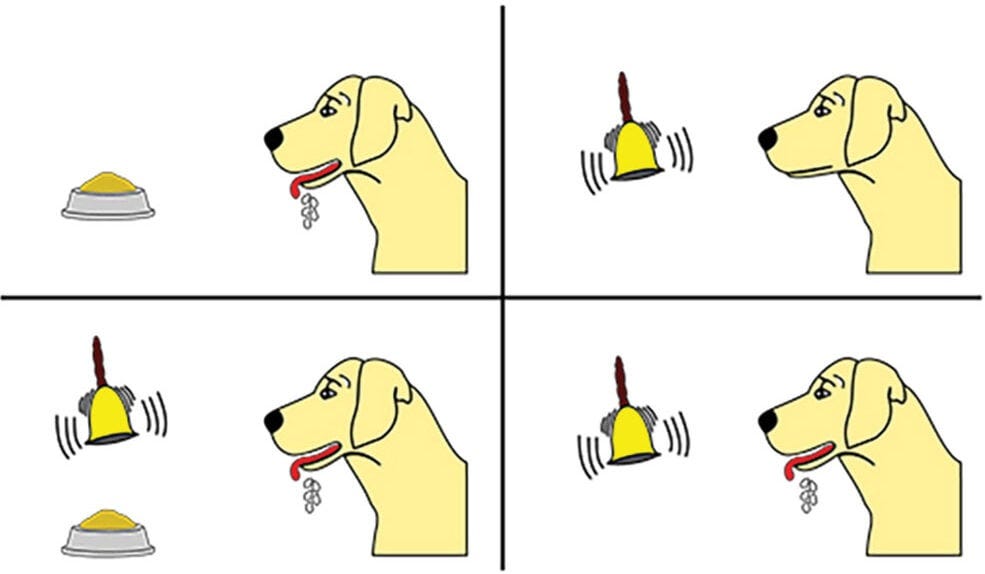
Picture this.
You’re scrolling, minding your business, and suddenly a name appears. A name conditioned by your nervous system to mean threat.
You don’t think.
You salivate.
You comment.
You assume intent.
You project.
You moralize.
You scroll faster.
This isn’t a character flaw on your part.
It’s a form of conditioning and it’s Pavlovian, but instead of dogs and bells, it’s you and the algorithm.
Let’s dig deeper🔍
Pavlov’s Dogs, Meet the Algorithm
In Pavlov’s famous experiment, dogs were trained to salivate at the sound of a bell, that sound became linked to the arrival of food. So the dog developed the understanding bell means food, that right there is classical conditioning.
Perceptual Conditioning: How the Nervous System Learns Reality
Alrighty data collectors. To understand how conditional caregiving shapes adult perception, we have to step outside moral language and into learning theory. And Safari riders— this is the time to place your perception goggles off of default view mode network. Classical conditioning, first described by Ivan Pavlov, demonstrates that the nervous system learns associations automatically, outside of conscious choice. In Pavlov’s experiments, dogs did not “decide” to salivate at the sound of a bell. Their nervous systems learned through repetition that the bell predicted food. Over time, the signal itself became reality. This matters clinically because children & adults are not learning meaning through logic. They are learning through pairing.
Emotional Classical Conditioning
In human development, the “bell” is not a sound.
It is:
A parent’s facial expression
A shift in tone
Emotional withdrawal
Silence
Praise paired with productivity
When a child repeatedly experiences:
Affection + approval immediately following cleaning, helping, or compliance
Emotional withdrawal or coldness immediately following noncompliance
The nervous system learns a pairing:
Productivity = connection
Rest / refusal / autonomy = danger
This is not a belief the child chooses. It is a conditioned perceptual reflex.
Just as Pavlov’s dogs salivated before food arrived, the child’s nervous system activates before rejection occurs anticipating loss of connection. The same way we anticipate loss of XYZ as adults and unconsciously sabotage good things.
Why Perception Becomes Rigid
Classical conditioning operates below cognition.
This is why, later in life:
Neutral feedback feels threatening
Boundaries feel like punishment
Silence feels abandoning
The adult is not “overreacting.”
Their nervous system has learned:
These signals precede pain.
Conditioning is associative, not logical, counter-evidence does not immediately undo it. You cannot “explain away” a conditioned response any more than you can tell Pavlov’s dog to stop salivating by reasoning with it.
This is why reassurance often fails.
The body has already decided what is happening.
The same way people assign meaning and motive to strangers videos online simply because of their algorithmic patterns. Keyword—their.
Conditioning and the Illusion of Victimhood
When early conditioning pairs disconnection with danger, the adult nervous system begins scanning environments for threat.
This can manifest as:
Chronic perception of being targeted or mistreated
Hypervigilance to tone, expression, or silence
Interpreting neutral events as personal attacks
It is also important to note. These process are not conscious forms of manipulation they are protector parts defending what the nervous systems has been conditioned to protect due to perceptual bias formed through that very conditioning. The nervous system is responding to old pairings, not present reality. The same way it responds to old blueprints in conflict with our partner. This is also why attempts to challenge the perception often escalate distress: because it gets interpreted as further evidence of threat.
Why Some People Collapse at Boundaries
Classical conditioning also helps explain the opposite phenomenon.
Children who were never paired with:
frustration
limits
emotional rupture + repair
They did not learn that discomfort can be survived. So when adulthood introduces boundaries or consequences, the nervous system lacks a conditioned pathway for tolerance. (no crayons aka “skills”for this level, because those skills were never developed)
There is no “bell” that predicts repair.
Only danger.
So, the collapse that shows up is the evidence of unconditioned fragility.
Clinical Implication: Deconditioning Perception
Since these nervous system responses are conditioned, healing does not come from insight alone.
It requires:
Repeated exposure to limits without abandonment
Consistent pairing of boundaries with safety
New associations between frustration and survival
In learning theory terms, this is not erasure it is extinction and replacement. The rewiring work that we do here in this corner of the internet. The old association weakens only when a new one is reliably experienced. Just like when trying to build new habits. You have to actually experience this new habits ignorer for them to imprint as new habits that replace the old ones. Until then, perception (the filtration system of our brains, that filters the information we download from the environment based on our internal lens and blueprints) will continue to override reason.
Why This Matters
When we frame these behaviors as character flaws, we miss the mechanism. We miss the patterns that are needed for this rewiring work to occur.
This is not about people being difficult.
It is about nervous systems that learned early:
Reality changes without warning.
And until perception is retrained through lived experience, the body will continue responding as if the past is still happening. So what occurred in the comments of our 3rd stop of the safari tour. (Instagram)
What happened in the comments wasn’t about ice. Nor was it about policy or ideology.
Making it about those is hijacking my entire corner of the internet. It was about what the name Renee Good triggered. When that name appeared, people’s brains immediately lit up and it wasn’t because of anything I said, but because Renee Good is now a conditioned cue tied to fear, identity, political frames, and deep emotional meaning. Her death was widely documented and shared online, and it became a symbol that activated a whole network of associations outrage, loss, injustice, tribal narratives, and pre-existing beliefs about state violence and race. So when that name was introduced into the conversation, many people weren’t engaging with the point I was making, they were responding to the affective charge attached to that name. Their nervous systems had already learned to react much like a Pavlovian conditioned response, because the topic touches on lived experiences, political identities, and collective trauma. They weren’t hearing my actual content about perceptual undercurrents; they were responding to what that name already meant emotionally to them.
That’s the pattern. It’s like everyone’s been trained to collapse into reactivity when the “signal” hits their nervous system, regardless of the context or relevance. Yours is no ice argument, no sideways deflection; it’s a classic example of how conditioned associations — a name, a symbol, a prior emotional investment — will hijack interpretation, distract from the original meaning, and create a whole new narrative that feels moral to them but has nothing to do with what you actually wrote. It’s the same way people weaponize parental dismissiveness or reflexively defend interpretations that don’t align with their already decided moral truth — they don’t argue the point, they defend the emotional architecture they’ve constructed around the cue. That’s why the conversation detoured: not because of logic, but because the brain salivated to react before it even registered the argument.
The most action out of all the videos, because people have been conditioned to collapse at the sight of their own projection of meaning while bypassing the original message. So now, the same logic that frames my work is supported all the sudden becomes” jarring” the moment a topic the public deemed as political comes up? Suddenly we are selectivity bypassing research on nervous system and neuroscience as a means to avoid our relationship with the algorithm.
What’s social media if not the modern bell?
🛎️ You see a name, a face, a tone, a topic, or even a color…
🛎️ Your nervous system rings the alarm.
🛎️ You react quickly, defensively, irrationally—before you even know why.
This is rehearsed survival. Your body is responding to training, not to truth which has multiple angles not just your own. But we as a collective don’t realize it despite the information out there. Why is that? Because scrolling became baseline for some many of us and that baseline created nervous system reactivity based on a curated algorithm that we consented too every time we log on. We argue psychology when these platforms were created with psychology in mind.
Comment Section Contracts (You Didn’t Know You Signed)
The moment you see someone online, your nervous system starts assigning contracts:
They must speak softly.
They must never say something that disrupts my bias.
They must never mention mental health if it challenges a beloved public figure.
They must reflect my pain, or they are a threat.
So when I say something neutral like, “If we care for Renée Good, can we talk about mental health?”—the contract breaks.
It has nothing to do with what I said.
But because of what your body was conditioned to feel when her name appeared. That’s why in this weeks Safari ride our third stop had a lot more comment activity. Because that’s how the algorithm works. It assessed my video took key words and sent it to the people it KNEW would react. How does it know that? Your behavior online that it is monituring. Your heart still bleeds, still aches for the events you keep clocking into.
But let me cognitively challenges us all.
It’s not about our hearts, it’s about her wife, her kids, the people who witnessed, the people who saw. This is how narcissim spreads. And when you have likes supporting your rightiousness to scream her name. While those involved are the ones whose days are altered because of this. THAT is the shadow work. And when VECNA comes you hate to see it— so what do we do? Flip it onto the messenger, make it about my minority status, my license, and your assumed intent—the noise.
And that discomfort (the 💩 we throw in shitty tennis matches) get's projected right onto me. Or baiting others into back and forth “debates.” See the pattern? Because it’s that very pattern that sends couples and families to therapy. How are clinicians suppose to help guide these turbulent conversations if people dictate the direction.
Nervous System Hijack, Explained
Let me say this plainly:
Your nervous system does not stop functioning when you enter a political conversation. It does not disappear when the topic makes you feel morally righteous. It does not excuse projection, cancellation, or character assassination.
When a trauma-trained nervous system perceives threat (even imagined), it will:
Freeze or fawn (confuse safety with silence or loyalty)
Fling blame toward the most available target (me, in this case)
Rewrite the narrative to protect its own identity
This is what live reactivity looks like. It’s not what the eye can see, but what the body can feel. This is the training. Thats when we pull out our notebooks and get to data hunting 📓✏️
DARVO, Deflection & My Chocolate Factory of Exposure Therapy
When you can’t sit with nuance, you:
Deny what was actually said
Attack the messenger
Reverse roles to become the victim
Over-identify with your perception as fact
That’s DARVO. And it’s everywhere online, in family systems, in breakups, and especially in comment sections.
Even when I speak from neutrality using metaphors, analysis, and years of clinical training the performance of moral superiority will hijack the room. The energy and you. You get swallowed up into the upside down.
“You should know better as a therapist.”
“You’re weaponizing your credentials.”
“You’re a minority, how dare you say that?”
What you’re really saying is:
“You didn’t reflect my pain the way I needed you to… so now you’re unsafe.”
Now where else in your life do you use that same muscle? 🔍 (This is the work)
It’s Not About Me. It’s About What I Mirror.
This platform has always been a mirror and no not in the gotcha culture kind of way. When some of you project that over here it's a little upsetting even for me. Because really? What benefit do I have trying to get people reactive and upset? How does that serve me?
My job isn’t to be liked.
It’s to be real, regulated— with milkdud animation, and rooted in nuanced truth. Let me be real here aside from making the content and doing all this work behind the scene. I have no idea what I am doing online and am learning as I go. Thinking I do this for my “brand” is a projection of your use and feelings towards these platforms.
I could have disguised myself as a talking tree but instead I showed up as myself.
And true transparency: I know my heart, what grief I hold for the world, and the services I give back to it. I will never explain or model that level of explaining to prove myself to people that are not apart of my real reality. I don’t want that for my clients, for myself, or for you. Fawning is now regulation. Over explaining only reinforces those who avoid and attack. That’s the sickness my work reveals in us all.
I have seen too many lives lost because of the streets of the algorithm. To many aches held to lose sight of my mission of this work. To train us to sit in discomfort without immediately cutting off, assigning blame, reacting whether internally or externally
You know, *insert giggle… I laugh because it’s “we love how authentic you are, keep being you!!” and then a trigger word is said and it’s “ no not like that” “ you’re a professional” “ you shouldn’t talk that way”
Do you think David Goggins cares when people tell him about his personality? Or how he speaks? When I was first introduced to his work that man scared me! 🤣 I thought “ why is he yelling at me” 🤭 It was until I got past the noise and reached his message that I could get passed the discomfort of my own projection of what his Goggins essence means. It is fascinating to experience how much people support you until your work touches something in them they don’t want to face. Then it’s watch your language, mind your tone, you’re a lady don’t speak that way.
My inner teen: “Says who?” 🤭
I joke my corner of the internet is the sacrifice

I model what happens when you:
speak from neutrality
blend soft tones with sharp clarity
don’t back down when your nervous system says, fawn now or lose love
Love, in these corners, often comes with unconscious contracts “strings attached”:
Only smile like this.
Only critique that group.
Only post soft, palatable healing.
Only call out what I approve of.
When I don’t follow the contract?
🛎️ Salivation.
🛎️ Reaction.
🛎️ Mislabeling.
🛎️ Block and unfollow.
💥This Is Exposure Therapy
Every time you enter this corner and get activated by:
My tone
My neutrality
My refusal to pick sides
My ability to speak as Sav, not just a licensed therapist…
You are walking into a therapeutic field trip A Nervous System Safari where what gets activated in you is the curriculum. Again no— this is not me framing it this way to project defensiveness and internalized antiblack alksfhasjrbg;eorbg;er whatever noise… Stories some of the mob mentality members come up with. You can disagree but when you assume another’s intent from that disagreement that’s the very data in your behavior needed to be assessed by you!
Because this same behavior online…
Is how you treat your partner.
Is how you mishear your child.
This is how you collapse under discomfort in family dynamics. It’s also how you sign contracts for others based on how you feel. But that inner world is yours to manage not the outside people you outsource that work to.
From Projection to Reflection
Instead of saying, “I don’t support ICE” in response to a post that was never about ICE to begin with…
Pause.
Zoom out.
Ask: What did I make that post mean about me?
What bell did the algorithm ring?
Ask:
Why did I assume this was a trap?
Why did I respond like it was personal?
Why do I believe certain topics are off-limits for someone with my skin tone, license, or personality?
I also am curious, why would people assume the same person you have been “standing by” is going to say something to be harmful on purpose? Can’t you see why so many have social anxiety these days? Y’all will turn on the very hand that feeds you just because you felt some heat and made meaning out of it declaring that meaning as universal truth. The video that got the most attention this week was the video that upset people the most. Guess what, we weren’t even in the conversation some took it too. That’s the trap…The portal back into the upside down even if it’s connected to rhetoric, politics, religion, etc.
None of that changes the fact our nervous systems our being trained by external forces outside of ourselves by undercurrents many are untrained to see.
That’s the conversation.
That’s the playground.
That’s the work.
The Brain Was Never Built for This
Through the gift of discomfort, we train the muscle required to allow the noise of the world even the ache of headlines, tone policing, and public projection—to move through us without becoming us. But let’s be clear: our brains were never designed to know what was happening all over the world at once. That is not what the human nervous system was built for. It was built to track what’s happening in your body, your home, your circle. your presence in that moment. And now it’s being force-fed crisis after crisis, betrayal after betrayal, accusation after accusation and then punished for not reacting the right way. You were conditioned to carry all of it. Not to care, but to react.
And the symptoms show up.
In your relationships.
In your anxiety.
In your burnout.
In your overexplaining.
In the way you collapse when misunderstood.
In how quickly you project an entire story onto a comment, a clip, or a face online.
All that overstimulation we call ADHD now? Yeah, that label ends up becoming a linguistic shortcut. Now all we have to do is just log it as ADHD instead of inquire about what’s happening internally to create the symptom that is showing up in the first place.
All of this creates nervous system hijack, not clarity not awareness.
The same nervous system that lights up when your mom walks into the room and ignores you, or when your partner starts a fight and somehow you end up apologizing.
It’s the same loop.
It’s the same muscle memory. And instead of seeing that loop the undercurrent I’m pointing to—it gets flipped onto the messenger. The focus shifts to the tone. Or the license. Or the “wrong” words. And that… that right there is the loop we’re rewiring. That’s the whole point. It’s not comfortable, but it’s also not off-limits just because your nervous system said so. Declaring something “off-limits” just because it activates you? That is control and we feel entitled to it. If we are not mindful that’s the very kind of narcissism born from a culture of algorithmic fawning and performance.
Now here’s my trip. My transparency.
I call this exposure therapy because I’ve never liked the algorithm to begin with. I actually despise what it’s done to people. What it’s done to our perception. How it flattens truth, twists communication, and trains people to emotionally gamble with every post, every comment, every thread. I didn’t enter this space because I love content. I did it because I wanted to make nervous system literacy accessible to the people, but also to me. What better way through felt safari experience.
Because let me tell yall ! 😩
I knew if I was going to walk into the lion’s den of unprocessed projection and pain, I had to do it as my full self. No character. No licensed avatar. Just Sav. The little milkdud and her brain she is sharing with you all. And it hurts when people twist your intent. Let’s not pretend it doesn’t. Especially when you’ve spent your whole life trying not to be misunderstood. Many of us were trained to shrink. To be overly kind. To contort ourselves just to avoid being misperceived. But that part of my nervous system? I don’t let her drive anymore. That muscle? I no longer exercise it. And what I’ve learned in the field notes is that some of y’all can’t stand a securely attached person who refuses to perform for your approval.
That’s because many of us are still out here performing.
To be picked.
To be chosen.
To be seen.
To be loved.
To be understood. But you don’t even do any of that for yourself. And so when someone like me shows up steady, direct, loving but not fawning your nervous system calls it a threat. You start attaching all these projections “You’re unaccountable.” “You’re harsh.” “You don’t care.” All because I didn’t cave or explain in the tone you demanded. All because I didn’t obey the contract you silently wrote and expected me to sign without reading. (The very thing we do to our loved ones)
Now here is the alarming part at least for me. Many of you are using therapeutic rhetoric to spiritually bypass your own shadow work. You’re misusing the words “projecting” “manipulation” and “accountability” to avoid what the mirror is showing you. You’re George-of-the-jungle swinging from word to word, hoping the psychology terms can carry you away from the discomfort I’m inviting you into. But let me ask you this—what do I get out of projecting? What do I gain from deceiving the public, from spending hours creating content, researching, citing, and filming… just to “manipulate, project or get defensive?” Where’s the logic in that? It’s odd how quickly people assign me an emotion. Ladies, y’all hate when your partner says “she has an attitude.” When they don’t like your tone. Same thing your mother did when you established a boundary.
Same nervous system. Same script. Same loop
And we keep getting stuck in it while gaslighting those aware, awake, and that can see clearly as the manipulators.
Getting pulled right back into the upside down.
Many of us are still training the muscle to see beyond what the eyes can see. To feel into the undercurrent. To observe what wasn’t said but was fully felt.
🛺🧙🏼♀️Buckle up, let’s field trip to a somatic journey through Case Study examples. Understand I have seen this behaviors across, cultures, faiths, and social classes. We are looking at human behavior not the subcategories we created humans to be in. Goggle up, Let’s zoom in🥽🔍
A father who doesn’t show up consistently for his kids shows up late—again. The school staff gives him a look. Not rude. Not even aggressive. Just neutral, but aware. He feels that undercurrent. He picks up on it. And what does he do? He explodes. “How dare you judge me!” Not because she judged but because he already felt the truth in the room. So explodes to avoid it… but wait… he doesn’t explode on the teacher he holds it in… he waits… then displaces that explosion on the partner. Why? Because no way he would do that performance publicly and tarnish his image.
That’s a man who has no regulation, but enough to encapsulate it until he is in the space or near the person who will allow that discharge. That’s a man who’s never been held accountable. So now, to avoid the shame, he turns it into a fight. And society might even label that moment as “bipolar” or “rage issues” or “anger management” when really, that was a nervous system collapse in a stew of emotional guilt. An emotion he may have never learned how to sit with and process as a child. The Mob of women who hate men right now will say “so he should grow up, he is an adult.” and my cognitive challenge to that is. Do you say the same thing to women?
Society always sees the undercurrents when it’s a man but what about a woman?
Example:
A woman was hurt—badly. A rupture that never got repaired or maybe even acknowledged. The kind that teaches the nervous system that closeness is dangerous and unpredictability is now a threat. She doesn’t walk around thinking “I’m traumatized.” She walks around thinking “I have to make sure this never happens again.” So she becomes anxious. Hypervigilant. She scans. She watches tone, timing, behavior. She doesn’t experience this as control. She experiences it as safety.
She starts regulating her anxiety by regulating her partner.
Who he can talk to.
Who he can see.
Where he can go.
Whether he can have social media.
What’s “appropriate.” What’s “disrespectful.” She calls it boundaries. She calls it protection. She calls it trauma-informed. When the partner reflects it back, names the control, the restriction, the imbalance—she collapses. Not into curiosity and not into reflection.
Into panic.
Tears.
Overwhelm.
Victimhood. “You’re attacking me.” “You don’t understand what I’ve been through.”
This isn’t because what her partner said was abusive but because it punctured the system that’s been keeping her regulated. That system was avoidance. That avoidance conditioned a nervous system to never learn how to sit with guilt or shame without needing someone else (outsourcing) someone to rescue it.
Now add kids to the mix.
The father. The grandparents. Extended family. Everyone learns the same rule very quickly: if we don’t comply, we lose access. So they tiptoe. They placate. They shrink. They absorb her emotional explosions soothes don’t lose access to the kids. The stay in the relationships as to not leave the kids alone with this woman. Because these same patterns. They are done to the kids too. And without realizing it, those very family members reinforce the pattern. Every time her anxiety explodes and the system rearranges itself around her, her nervous system learns: this works. Every time people silence themselves to keep the peace, her system learns: I don’t have to tolerate discomfort others will carry it for me.
Our mothers do this when they triangulate, our grandparents do this, people do this.
Understand, by the time of adulthood this may not always be conscious.
That’s the conditioning. The shame, guilt, etc is the sensational alert in the body guiding you to the source of the ache within. That’s the internal assignment for us all.
Now, I squirreled a bit let me get back on track…
This same woman goes to therapy convinced the problem is the partner. And early on, that makes sense because her pain is real. But when a competent therapist eventually names both sides of the equation the trauma and the control—the collapse happens again.
This time with accountability.
She deflects with tears. Trauma language. Victim storytelling. Not to deceive, no no no let’s make this clear. This is an unconscious process— the moment we get activated into accountability but more importantly activated into the exposure of facing and having emotional ownership of Guilt, Shame, Embarrassment etc… When we have never had to face those… We pufferfish 🐡, we activate, we spiral into nervous system tunnel vision to regain regulation for ourselves. In this example she knows the only way she knows how which is to explode, collapse, cry, etc.
This is puffer fish behavior folks. This is egocentric loops that can turn into vulnerable (covert) forms of narcissism. The form many of us want to turn a blind eye to because it reveals the parts of ourselves that check into the vulnerable narcissism hotel from time to time. This is how the nervous system attempts to regain narrative control. To preserve her image. To avoid guilt and shame that her system was never taught to metabolize. As a child, those emotional states were bypassed, never held. Because someone fixed it. Someone soothed it. Someone absorbed it for her. Or someone flat out avoided it and avoided the little her just like what occurred to the little him. So now as an adult, avoidance isn’t a choice. It’s the system.
People call this anxiety. Or “just trauma.” Or “empowerment.” What it actually is, is a nervous system that learned to externalize discomfort instead of tolerating it.
SSRT time.
Shit Sitting Reflection Time. The enforcement portal needed for us as humans to learn to sit in our shit and the discomfort that comes with it. When we don’t the house now becomes full of elephants. Everyone knows what can’t be said. Everyone knows what will trigger her. Everyone organizes their behavior around it. They survive around the dysregulation instead of through it. And because there are no natural consequences, no limits that are allowed to land—the pattern never rewires.
This occurs because no one ever taught her that she could survive the feeling she’s been running from her entire life. This is what we’re doing now in macro-level conversations. You think just because we’re talking about race or politics or systems that nervous system function suddenly disappears?
No.
Those same undercurrents live there too. But instead of acknowledging them, people weaponize identity, morality, or cultural status to skip the mirror. “Oh, she’s an elder, so we can’t challenge her.” “Oh, that’s a black parent, so they get to weaponize religion or silence you.”
No, loves.
Over time that becomes emotional abuse, and we are making this the norm culture just so we can avoid the discomfit that comes with having the conversation. These are the highways generational trauma rides on. And now the algorithm has learned how to mimic those same highways training you to react, to fawn, to accuse, to cut off—depending on who did it and how you feel about them. And that to me, is the most terrifying part. When your perception is hijacked, you think it’s discernment.
But it’s not.
It’s reactivity and the things that are happening in that reactivity. Are now being justified, bypassed and that’s the awareness we need to start bringing to mental health.
Final Reflection
This is the discomfort I sit in every time I show up to the corner to speak these truths knowing full well I will be misunderstood.
My Exposure therapy mission is learning to Let Them create the narrative without collapsing into fawning to be accepted and I model it publicly through my work and transparency moments. (the moments where I specifically tell you where I am at, not what you interpreted) If your nervous system was trained to mistake discomfort for danger, Then being in this corner might feel wrong at first.
But it’s not.
It’s repatterning in real time. Playground style!🛝☺️
And that’s exactly why this space exists.
So, how are we feeling?
Where are we at right now?
What are you carrying that you have been conditioned to hold that you are free to let go of?
What will you pick up for yourself now that the space within has been cleared?
That’s your homework.
Till next time data collectors.
Come as you are. Where you are. 🫶🏽
References
Bowlby, J. (1988). A secure base: Parent–child attachment and healthy human development. Basic Books.
→ Attachment, proximity-seeking, threat perception, early relational conditioning.
Bouton, M. E. (2007). Learning and behavior: A contemporary synthesis. Sinauer Associates.
→ Classical conditioning, extinction, replacement learning, cue-based responses.
Cozolino, L. (2014). The neuroscience of human relationships: Attachment and the developing social brain (2nd ed.). W. W. Norton & Company.
→ Social neurobiology, co-regulation, shame, guilt, and nervous system learning in relationships.
Hill, N. (1937). Think and grow rich. The Ralston Society.
→ Concept of “drifting,” distraction, and loss of conscious direction (used metaphorically).
Kernberg, O. F. (1975). Borderline conditions and pathological narcissism. Jason Aronson.
→ Splitting, projection, image preservation, shame avoidance, ego defenses.
Linehan, M. M. (1993). Cognitive-behavioral treatment of borderline personality disorder. Guilford Press.
→ Emotional dysregulation, invalidating environments, collapse under accountability.
Pavlov, I. P. (1927). Conditioned reflexes. Oxford University Press.
→ Classical conditioning, cue-based learning, automatic nervous system responses.
Siegel, D. J. (2012). The developing mind: How relationships and the brain interact to shape who we are (2nd ed.). Guilford Press.
→ Integration, perception, bottom-up processing, nervous system hijack.
van der Kolk, B. A. (2014). The body keeps the score: Brain, mind, and body in the healing of trauma. Viking.
→ Trauma memory, somatic reactivity, past-as-present responses.