

There are wounds we carry so quietly, even we forget they’re there— until someone sees us.
As a therapist,
I sit in the same chair day after day. The people in front of me may change, but the wounds rarely do.
Different names. Different faces.
But the stories?
Those stories they start to rhyme.
The wounds we carry don’t always look like trauma. Sometimes they look like routines, or silence. It may even look like doing your best and still feeling as if it’s never enough. It may look like the wife/husband who goes home to a parter that feels like a roommate, wondering how exactly they got to this point
The husband who stands in the kitchen after the kids are asleep, thinking, “Is this really all I am?”
The teenager who hides out in their room or even at a friend’s house— not out of rebellion, but because the emotional climate in the home due to the larent’s feels thick with tension.
The mother who holds it all together by day, and collapses in the bathroom at night while the kids sleep.
The father who aches with shame, not because he doesn’t love his family, but from no one ever teaching him how to show it.
The man who ties his worth to his paycheck and calls it being strong.
The child who stares at the ceiling while two people argue about who loves them more.
The partner who bends and bends and bends, hoping it will finally feel like enough.or the one who sits in therapy and says, “I don’t even know what I feel anymore.”
These are the wounds we carry.
Quietly.
Skillfully.
But not without cost.
A life that feels as if it's been lived behind glass.
Sometimes, especially in certain cities, I hear nearly identical stories within hours of each other. Different ages. Different racial or spiritual backgrounds. And yet… the exact same ache.
📚 Neuroscience tells us that the brain is a pattern-matching machine.
Once a painful experience is burned into the nervous system—especially through repeated or relational trauma our brain is wired to expect more of the same.(Cozolino, 2014; Siegel, 2012)
And so we repeat.
We react.
We protect what hurt.
We suppress what scared us.
But unspoken pain doesn't disappear.
It sediments.
Hardens.
And that hardness? That sediment? It lives in our nervous systems. It becomes emotional pollution. It lowers our resonance. It anchors us in resentment, shame, fear.
We live in this low frequency and mistake it for our ‘normal.’
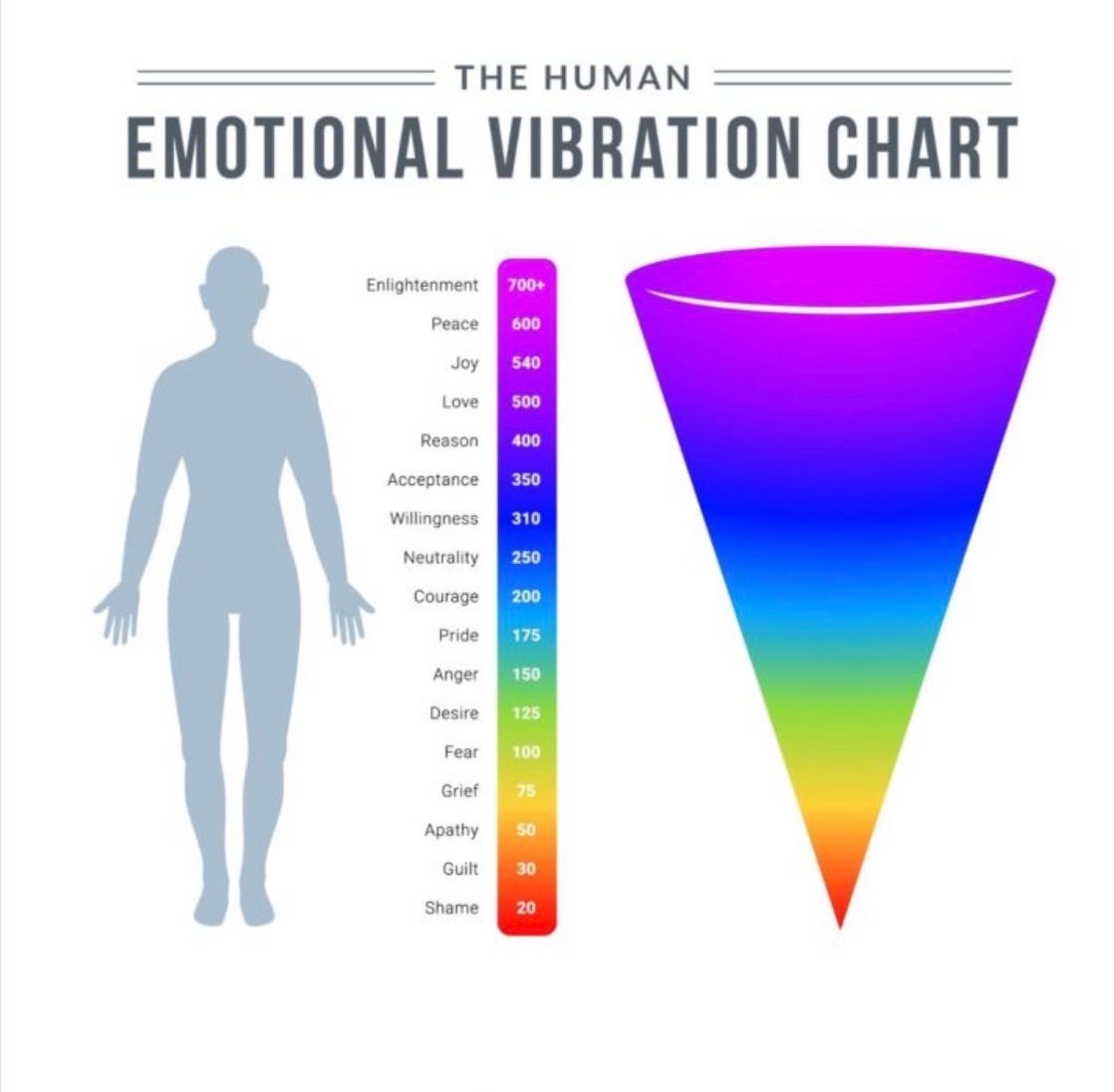
But the field is relational, too — we send ripples. We infect and are infected. By what I call…
Emotional Pollution.
It smolders under the surface, vibrating at frequencies too heavy to hold— but too familiar too release.
We hurt each other— because we’re hurting. But we rarely stop to say that out loud.
We rarely say:
“I pulled away because I didn’t feel safe.”
“I yelled because I didn’t know how to ask for comfort.”
“I ghosted you because I felt ashamed.”
Instead, we stew.
We interpret. We assume. We mind read.
We protect our version of the story declaring it as fact without ever checking to see if it’s true. And slowly, we widen the gap.
Wider and wider, until we forget that all it would've taken was one vulnerable moment to bridge it.
📚 When we suppress emotional experiences instead of processing them, the amygdala, the brain's fear center remains activated. We stay in a state of hypervigilance, even when the threat is gone.(van der Kolk, 2014; Barrett, 2017)
That’s why we overreact to small things.
Why our tone is sharper than we intended
Why our partner becomes the enemy in the middle of an argument.
Because our pain is leading the way.
The illusion of separation is killing our connections.
We scroll devices that show us curated rage & happiness. We let the algorithm tell us what the world is feeling instead of sitting with the actual world around us.
And yet, in session after session, I’ve seen the same fears, same wounds, and the same longings show up in people who would otherwise assume they have nothing in common. Or, holding the belief that no one would understand them and the pain they carry.
People from different countries.
Different life backgrounds
Different imprints.
Same nervous system responses.
Same yearning to feel held or seen.
Same fear of being abandoned.
If only we paused.
If only we asked, “What are you holding that I cannot see?” If only we could soften the part of us that assumes everyone is against us.
We could bridge the gap.
We could stop emotional pollution at the source. Because emotional pollution starts in silence. In avoidance. In the buildup of stories that were never spoken.
Healing begins with one conversation.
One sentence.
One person choosing to speak from the wound instead of the wall.
The wall many of us seem to be stuck in gridlock with. Is the feeling of not having…
The Safety To Speak.
The Safety to Speak became the foundation of my clinical framework, but not even just that. It became a blueprint for the way I move through the world and the people that enter my experience. It reflects what I’ve witnessed across hundreds of sessions — in conversations, in nervous systems, and in the silent moments between words.
We can’t heal what we can’t name.
We can’t name what we don’t feel safe enough to say.
But once we learn that the safety to speak is not something others grant us— it’s something we learn to cultivate from within. We access a level of emotional freedom, to be authentically ourselves.
I promise you: the wounds we carry…
We carry together.
And we heal them together, too.

References
Barrett, L. F. (2017). How Emotions Are Made: The Secret Life of the Brain. Houghton Mifflin Harcourt.
Cozolino, L. (2014). The Neuroscience of Human Relationships: Attachment and the Developing Social Brain (2nd ed.). Norton.
Siegel, D. J. (2012). The Developing Mind: How Relationships and the Brain Interact to Shape Who We Are (2nd ed.). Guilford Press.
Van der Kolk, B. (2014). The Body Keeps the Score: Brain, Mind, and Body in the Healing of Trauma. Penguin Books.
good stuff 😁😁