

Alright data collectors. This has been a big project for me.
Over the course of this last year. Collecting data not just from my lived experience, but also from my clinical practice, and observing human behavior in systems. One overlap I am seeing especially if you live in America, is the family system of America.
Are y’all ready to get into it?
I challenge you despite being uncomfortable to see if you can access true inquiry and not reactivity. You will know it’s reactive based off if your immediate response is to criticize, or minimize who I am because it’s a nuanced truth that may seem too loud.
None of this work is about me, the lessons embedded deep within this are rooted in helping us understand the mechanisms we are all using within the relationships closest to us.
If the shoe fits is what I always say. Then it’s a portal into something deeper within you. Remember perception is the root of my work. The eyes that read this will all interpret different perceptions. Neither is good, bad, right, wrong. It just is—what we do with that is the real work.
This essay is about the psychological patterns not the context itself. This is going to be hard for society today especially after 2020, because in isolation times we saw what that did to the collective. I am a firm believer that being in captivity causes psychological strain so much so that just like in our relationships we end up stranded in the island of rumination. So if we spend time shipwrecked on that island long enough we will develop side effects. I truly believe what we are seeing today are the side effects of that time spent in rumination. The family of America had so much time to play mad libs due to what the media was feeding us all—or at least those of us who eat up the media. The goal of this essay is not to pursuade the reader anything. But to allow us the ability to pause long enough to expand our minds, see the undercurrents and the neural highways we have been conditioned to take again and again. No matter the context— this pattern has spilled into our families, relationships and workplace dynamics making it harder to rewire out of.
Let’s get into it.

Abstract
This paper proposes a psychological and sociological hypothesis: that the contemporary American sociopolitical landscape functions as a large-scale, dysfunctional family system. We posit that citizens have been conditioned into specific familial roles—the Golden Child, the Scapegoat, and the Enabler—by “parental” institutional bodies (political parties and media) to ensure systemic stability through division. Utilizing frameworks of Bowen Family Systems Theory, Schema Theory, and Neurobiological State-Dependent Perception, we argue that individuals are being “groomed” into collective groupthink, effectively trading personal agency for tribal belonging. This essay examines the “Discomfort Displacement Cycle” at a national scale, where unresolved systemic shame is projected onto marginalized groups to prevent a collective “Family Meeting” that would demand institutional accountability.

I. The Family You’re Already In
The American sociopolitical landscape is not a theater of war even though it feels like it, but let’s zoom in. What we are really seeing is a collective reenactment of familiar wounds in us all. To understand why our discourse feels so visceral, we must move past the idea of policy differences and recognize that we are living within a macro-reenactment of a dysfunctional family system. This is a system where the “Parents” (the Institutional State and Political Parties) maintain power not through any real leadership, but through the clinical application of enmeshment, trauma bonding, and the strategic assignment of roles. The very roles each and everyone of us lived through within our own childhood.
The current state of American discourse is characterized by what I like to call “Noise”—a state of constant distraction, deflection, and gaslighting. This environment mirrors the glitch seen in families where parents refuse to acknowledge harm because their egos cannot process the associated shame or guilt. As a result, the collective is currently experiencing a trauma reenactment, where the “siblings” (demographic, marginalized, and political groups) turn on each other rather than addressing the elephant in the room: an abusive parental system that thrives on trillions in unaccounted-for losses while demanding total compliance. All while utilizing fear to get that compliance.
Is it starting to feel familiar yet?
Buckle up…
Systemic Roles and Archetypes
In any dysfunctional household, roles are assigned to manage the parents’ anxiety and shame or who ever dictates the emotional climate of that environment. In the American Family System, these roles have been scaled to fit entire demographics:
The Golden Children (The Groomed Minority): Minority groups, Queer, and Trans communities are currently being groomed into the Golden Child role. Now, let’s understand something as we examine this. This isn’t true allyship; it is enmeshment for utility. Key word here, utility. The “Parent” (the Party) uses validation and “love-bombing” strategies such as waving flags, using specific vernacular all to connect to specific communities to try and portray relatability such as wearing a pride flag or bringing hot sauce to the interview with a black individual. Anything to grant a false sense of cultural power to ensure total loyalty. The issue here is the collective is too unconscious to see the covert tactics happening. If any of you have read the book Outwitting The Devil, this is what Napoleon Hill would call drifting. The modern society today is in a massive drift state contributing to unconsciousness. They were designed to look at the “villain” — the opposing side. This is why humans today are always looking for an enemy. See how tribalism can be used for avoidance or as a distraction? The Golden Child feels “heard” but is actually being capitalized upon, used as a moral shield to protect the Parent from accountability. Remember, the parent in this theory is the political party we blindly support without inquiry.
The Scapegoats (The Designated Villains): Depending on the “Parental” party in power, the Scapegoat in today’s American society is often White “cis” males and White women. Yeah, I said it…. What comes up for you reading that? What happens in the nervous system? What mind movies or stories did your mind just flash for you?
In this system, the Scapegoat is the container for all systemic failure. By pointing at the Scapegoat, the Parent ensures the “Children” never look at the Parent’s own behavioral fraud or incompetence. No matter what side you claim to be on—we can all agree fraud is at the forefront of a lot of this. It’s easy to blame white people in today’s times rather than looking at where we perpetuate our own stagnation.
The Lost Child (The “Conspiracy Theorist”): These are the individuals who have begun to see the glitch in the algorithm. They notice the elephants in the room—the missing trillions and the institutional inconsistencies. However, because they disrupt the family’s manufactured peace, they are bypassed and labeled as “crazy” or “conspiracy theorists” to neutralize their data. Hmmm… this is feeling very familiar.
The Golden Goose (The Institutional Government): The entity that produces the “wealth” (or the illusion of it) that everyone fights over, yet no one is allowed to audit— by use of inquiry. Can you see why injury is such an important skill to exercise? It makes sense to me why many don’t or are afraid to.
The Somatic Trap: Trauma Bonding as Policy
We are currently normalizing maladaptive behaviors as a primary means of avoiding direct accountability. The “Noise” we hear daily—the constant cycle of outrage—is a distraction designed to keep the population in a state of Preemptive Embodiment. You feel the tightness in your stomach or the shallow breath before you even read a headline, because your nervous system has been conditioned to expect a storm. We have discussed pavlovian style conditioning. If you are new you can catch that essay below.

This is a Trauma Bond on a national scale. Marginalized groups pick the “Parent” (political party) they believe will save them, not realizing they are being herded into a Narrative Prison. You see this with the mayor in NYC, and we experience this form of coercive control through allyship here in El Paso where they use threats for things so minor such as threatening to take your recycle bin away or similar to what occurs in California where city forces use massive fines to get compliance. In this prison, the ability to inquire—to simply ask “Why” has been surgically removed through social conditioning. We have made the population afraid to ask questions because, in a dysfunctional family, Inquiry is seen as betrayal. Now, majority of the unconscious collective cannot see this because they are too busy being blind loyalty members to narratives and beliefs about the “other” to keep them stuck in the shitty tennis match of constant conflict.
We are witnessing Pop Culture on trial because we are finally seeing our own household dynamics projected onto the screen. You can see that with the OJ documentary and selected celebrities that get “off the hook” for piss poor behavior. Almost like we use celebrities as puppets for the game. Think about what Will Smith did with slapping Chris Rock and was there a consequence for his behavior? no— so what does that teach and model at scale? Celebrities play a role at leading the unconscious to pick a side based on blind loyalty factors they have to that celebrity. We are watching the messy, uncurated collapse of a system that thrived on our division. The algorithm is glitching because the “siblings” (Left, Right, Black, White, Queer, Cis) are starting to realize that the “Parents” don’t actually care about them—they only care about the compliance that keeps the house standing within the dysfunctional system we are all apart of.
It’s easier to be mad at ICE.
It’s easier to be mad at corporations, politicians, billionaires, the President or whatever institution is currently occupying the role of societal villain. In many ways, outrage is the easiest emotional currency available to us. Despite its impacts psychologically to the mind, body, and spirit of humans. It gives us somewhere to displace our discomfort. Somewhere to direct our fear. Somewhere to assign responsibility. The problem is that outrage can also become a very effective distraction from self-examination. If all of my attention is focused on what “they” are doing, I never have to ask what role I might be playing in the very system I claim to oppose. Family therapists have been studying this dynamic for decades. Murray Bowen (1978) observed that anxious family systems often organize themselves around an identified patient—the person everyone agrees is the problem. The family becomes consumed with discussing the rebellious child, the alcoholic parent, the difficult spouse, or the family member who appears to carry all the dysfunction. What often goes unnoticed is that while everyone is busy studying the identified patient, very few people are examining the emotional process of the family itself. The identified patient may be symptomatic of the dysfunction, but they are rarely the entirety of the problem.
I sometimes wonder if America does the same thing.
We spend enormous amounts of time arguing about ICE, corporations, political parties (right vs left), influencers, celebrities, and public figures. These conversations dominate our feeds, our headlines, and our dinner tables. Yet far less attention is given to the everyday ways ordinary citizens contribute to the emotional climate we claim to dislike. The therapist who avoids difficult conversations because they fear losing a client despite their job to be the neutral person, not the person who overly validates. The teacher who remains silent because speaking up feels risky or puts them at risk for exile amongst other teachers or staff. The journalist who knows outrage generates engagement. The Judge who projects their trauma onto custody dynamics making it difficult for the father who is a good man to have access to their child. The influencer who profits from division, so they post what is socially acceptable to get the views. The citizen who shares information without verifying it because it confirms an existing belief. None of these behaviors make national headlines. Yet collectively, they shape culture every single day. The uncomfortable truth is that systems do not operate independently from the people within them. We often speak about governments, institutions, and corporations as though they are separate organisms floating above society, disconnected from ordinary people. They are not. Systems are built, maintained, reinforced, and protected by human beings. They require participation. They require compliance. They require people willing to perform tasks, follow orders, remain silent, look away, or justify behavior that conflicts with their values. The “parents” of society may create the rules, but the rest of us are often carrying them out with our own hands. Just peep into your workplace.
This is where the conversation becomes uncomfortable because accountability is far less satisfying than outrage. Outrage gives us dopamine. Accountability requires humility. Outrage allows us to feel morally superior, while accountability forces us to acknowledge our contradictions. Social psychologists have repeatedly found that people are far better at identifying bias, hypocrisy, and moral failures in others than they are in themselves (Pronin, Lin, & Ross, 2002). We possess an extraordinary ability to see everyone else’s contribution to the problem while remaining largely blind to our own. From a family systems perspective, this is not particularly surprising. Anxious systems naturally externalize responsibility. They look for someone to blame. Someone to fix. Someone to punish. Someone to remove. The fantasy is that if we can just get rid of the identified patient, the system will finally function. Yet the history of families, organizations, and nations suggests otherwise. Remove one scapegoat and another quickly emerges. Replace one villain and a new one appears. You see, the target changes, but the emotional process remains the same. The mechanism remains.
Sometimes I watch what are described as “peaceful protests,” and I find myself wondering how much of what I’m witnessing is genuine civic engagement and how much resembles a family DARVO session happening on a national scale. Not all protests. Not all movements, but enough to notice the pattern. Denial of personal contribution, aggressive displacement of responsibility, and reversal of accountability. All lead to a collective insistence that the problem exists entirely outside of us. The language changes. The slogans change. The hashtags change. Yet underneath it all, I often see something that looks remarkably familiar to what happens inside distressed families.
Perhaps the most uncomfortable question is not what ICE is doing, what corporations are doing, or what politicians are doing.
Perhaps the more uncomfortable question is this:
What am I doing?
How am I contributing?
Where am I participating in the very thing I claim to oppose?
Because the moment we become unwilling to ask that question, we stop behaving like differentiated adults and start behaving like children demanding that someone else clean up a mess we helped create.
II. The Grooming of the Collective Golden Child
In clinical family systems, the “Golden Child” role is a strategic assignment—a child is not chosen for their inherent needs, but for their utility in regulating the parent’s ego and stabilizing a fragile family unit. How many people can we get to support and vote for us and what do we need to do perfomrativly to get them to “trust” us? When we scale this to the American macro-system, we observe a sophisticated process of Institutional Grooming. Political entities (The Parent) identify marginalized demographics—specifically Minority, Queer, and Trans communities and pull them into a state of Enmeshment. This enmeshment is facilitated through a trade: the Parent offers a false sense of power through symbolic gestures (e.g., rainbow branding, specific cultural pandering, and performative validation, inclusivity etc) in exchange for total tribal loyalty. This dynamic mirrors the love-bombing phase in toxic romances, where the individual is flooded with a sense of being “seen” and “valued” to mask an underlying predatory capitalization on their identity.
This loyalty is not free it comes with trade off that we are seeing many okay with paying. It is purchased at the cost of the group’s critical thinking, informed choice, and cognitive nuance. As members are herded into groupthink roles, they experience a degradation of the neural pathways required for independent evaluation. They become high-functioning sheep within a narrative prison they truly believe they created yet fail to realize where the ability to inquire and to ask “Why?” If you notice the elephant in the room, well that get’s framed as a betrayal of the family unit. This creates a population that is cognitively lazy, accusatory, and manipulative, opting for the safety of the narrative over the effort of true agency. Meaning, if we have been conditioned into fearing inquiry or even asking why. Anyone else that does is automatically “bad, dangerous, unsafe.” Do you see how polarity enters the chat? Can you see how this complicates things when faced with real people in the real world? Especially therapists who are designed to challenge, hold nuance, and leave implicit bias at the door. This creates double binds when we enter into fields where directness, and accountability are part of the work. Pause real quick. What is your perception on directness? That word will look differently in the mind for us all, let’s get clear on that.
Let’s jump into our first case study…
But let’s check in with the nervous system thus far.
How is everyone doing? What are you feeling? What is coming up?
Case Study 1: O.J. Simpson – The Archetype of the Caged Golden Child
The O.J. Simpson trial was a national family meeting that exposed the mechanics of this archetype. Simpson existed within a self-constructed movie where he was “The Man” which was a role fed by a history of fatherlessness, a drive for hyper-masculinity, and a desperate need for external validation which he got through his celebrity status.
Lets look at the the following data:
Systemic Enabling: Simpson was the Golden Child of an entire cultural ecosystem: fans, legal architects, and media entities who relied on his status for their own utility.
The Family Role Projection: During the trial, Blackness and Whiteness were not treated as complex identities but as rigid family roles used to manipulate the national psyche. The legal strategy succeeded by forcing the public to choose a “parental side,” effectively bypassing the facts of the crime.
The Scapegoat vs. The Protected: To keep the Golden Child “heroic,” the system required a Scapegoat. The focus was redirected away from the human trauma of the victims and onto the systemic failures of the “other parent” (the LAPD).
The Inquiry: The Inquiry: Who needed O.J. to remain a hero?
The communities that were enmeshed with his success could not afford his humanity or his potential for darkness, because doing so would have shattered more than a public image. It would have threatened a symbolic victory. O.J. was not merely a man. He had become a projection screen. A symbol. A vessel carrying collective hopes, grievances, aspirations, and identity needs. To acknowledge his flaws meant risking the collapse of a narrative that many people had emotionally invested in. This is where family systems become incredibly useful. Bowen observed that anxious systems often assign symbolic roles to individuals. The hero. The scapegoat. The golden child. The victim. Once someone occupies one of these positions, the system becomes invested in maintaining the role because the role serves a psychological function for the group. The role itself becomes more important than reality. Zoom out, at a societal level, communities often do the same thing.
The O.J. case exposed something uncomfortable, not simply about race, but about tribalism. The question is not whether racism existed. It did. The question is not whether black Americans have experienced systemic oppression. They have. The question is what happens when legitimate historical pain becomes fused with identity in such a way that accountability begins to feel like betrayal.
Case Study 2: The Family System – How the Golden Child is Created
Before we can recognize these dynamics within governments, institutions, political parties, or social movements, we have to understand how they first develop inside ordinary families. Family systems rarely organize themselves around fairness, just look back in the hippocampus archives of your life.
They organize themselves around anxiety.
When a couple welcomes their first child, they are not simply becoming parents. They are also confronting versions of themselves they have never met before. There is no manual capable of preparing someone for every emotional trigger that parenthood awakens. The first child often receives the most inexperienced version of the parent. They become the family’s first experiment in attachment, discipline, emotional regulation, and repair. As Gabor Maté (2022) notes, siblings are never truly raised by the same parents because parents themselves are continually changing. The mother raising her first child is psychologically, emotionally, financially, relationally, and biologically different from the mother raising her third. This difference does not automatically create dysfunction. What creates dysfunction is the parent’s inability to metabolize guilt. Boy oh Boy is guilt one hell of a weapon, but one hell of an emotion that causes humans to act in ways they may not typically behave as.
Suppose the firstborn begins setting boundaries as an adult. Perhaps they confront years of emotional neglect. Maybe they point out the inconsistencies between how they were disciplined compared to their younger sibling. Maybe they describe feeling unseen, parentified, criticized, or chronically responsible for maintaining the emotional climate of the household. At that moment, the parent faces an uncomfortable psychological crossroads.
One path requires accountability.
The other requires self-protection.
If acknowledging the firstborn’s experience threatens the parent’s identity as a “good mother” or “good father,” the nervous system often chooses protection over repair. Rather than tolerating shame, the family unconsciously reorganizes itself to preserve the parent’s emotional equilibrium. Bowen (1978) described this as the system’s attempt to restore homeostasis. So now the goal within the family is no longer about truth its about maintaining stability. But what is ability in dysfunctional environments? This is where family roles quietly begin to crystallize.
The oldest child, who was once simply asking to be understood, slowly becomes “the difficult one.”
“The dramatic one.”
“The angry one.”
“The ungrateful one.”
Meanwhile, the younger sibling learns something equally important.
Safety comes through alignment. They are observing the parents response to their older sibling and learn what not to do, or what to do in order to get on the parents good side. Som If siding with the parent reduces conflict, preserves closeness, or secures affection, the younger child unconsciously learns to participate in maintaining the family narrative. They don’t have to be manipulative to do this either. In fact, many children genuinely love both siblings. Yet children are exquisitely sensitive to emotional climates. They quickly learn where safety lives.
Sometimes safety lives in silence, lives in agreement, or it lives in helping the parent carry the illusion that nothing is wrong.
This is how enmeshment develops.
Over time, the parent becomes increasingly fused with one child, often confusing emotional dependence with closeness. The relationship begins serving the parent’s unmet attachment needs rather than the child’s developmental needs. The child gradually becomes confidant, emotional regulator, protector, therapist, surrogate partner, or symbolic proof that they were, in fact, a successful parent. What appears to outsiders as extraordinary closeness may actually reflect blurred generational boundaries rather than secure attachment (Minuchin, 1974). Now, what is the cost of this arrangement because it is profound.
The favored child learns that love is contingent upon loyalty.
The scapegoated child learns that truth is dangerous.
The parent learns that avoiding accountability temporarily reduces anxiety.
And the family mistakes this fragile equilibrium for peace. What is the messaging and modeling that is taken from this? Well—avoidance. Perhaps the most tragic consequence is that the siblings themselves often begin participating in the system. The younger sibling may genuinely believe the oldest is selfish, difficult, or overly sensitive because that narrative has become the emotional language of the household. Aligning with the parent protects them from becoming the next target. Family systems have an extraordinary ability to recruit children into preserving dysfunction without anyone consciously intending harm.
Now zoom out.
Replace the mother with a political party.
Replace the favored child with a preferred voting bloc.
Replace the scapegoated sibling with the group blamed for the family’s distress (white people)
Replace the household with a nation.
The mechanics barely change.
The names do.
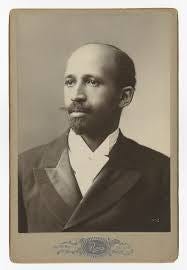
W.E.B. Du Bois (1903) described what he called double consciousness which is the experience of seeing oneself through one’s own eyes while simultaneously viewing oneself through the lens of a society shaped by racial prejudice. This was an extraordinarily important contribution because it highlighted the psychological burden carried by black Americans navigating a society that often distorted their humanity. Yet every adaptation has a shadow. When a community has spent generations being misrepresented, stereotyped, or demonized, a powerful protective instinct can emerge. Criticism from within the group begins to feel dangerous. Accountability begins to feel risky. Public acknowledgment of dysfunction can feel like handing ammunition to an already hostile world. Now Zoom Out. We see this today within the black community. I call for a family meeting and many stuck in perception find that to be a threat. Many within the community what members in the same community to get their shit together. Now, Many of us who are apart of the community are fighting stereotypes that in today’s time are being perpetuated by its own members. This is where you get in group rivalry. We don’t need to examine the family system within black culture because we can stay focused on the historical past injustices as a vine to escape the discussion that can lead us to connection. So what happens. We bypass or dismiss certain maladaptive behaviors, rationalize it as an issue with white supremacy as a means to manage the image of black people.
The community cannot afford a bad look and that is where things become complicated. Why? Because what begins as protection can slowly transform into enablement.
All that started in the name of solidarity now becomes silence.
What begins as loyalty can become denial.
The original purpose was survival.
The unintended consequence becomes stagnation. This is what we see today in modern times.
One of the clearest examples of this dynamic occurs inside families where image slowly becomes more important than repair. I see this with religious based families, cultures, and those in the public eye such as influencer families, couples, or individuals on boards of organizations that provide access to the public scrutiny. Imagine a father who struggles with alcohol. Every weekend he becomes verbally abusive, emotionally unavailable, or unpredictable. As the oldest daughter grows older, she begins noticing the pattern and eventually finds the courage to bring it up. She isn’t trying to shame her father, she is simply accessing expression highway to build connection and repair. The daughter in this example simply wants the family to acknowledge that something isn’t working because she can already see the impact it’s having on her younger siblings, who maybe she has become so parentified because of this dynamic that she has become protective of her younger siblings. Instead of her mother responding with curiosity or accountability, the conversation immediately shifts. “We don’t talk about family business.” “Your father works hard.” “Every family has problems, you are ungrateful” “Why are you always looking for something that’s wrong?” In that moment, the problem quietly changes. The father’s behavior is no longer the threat. The daughter’s willingness to name it is.
Over time, the emotional climate of the household begins reorganizing itself around protecting the family’s image rather than repairing the family itself. The younger siblings learn that questioning dad creates conflict, but agreeing with mom restores peace. So what do they do? they don’t consciously choose dishonesty. They choose safety. They begin minimizing the drinking, explaining away the outbursts, and eventually defending the very behavior that has harmed them because participating in the family narrative keeps them emotionally connected to the system. The oldest daughter slowly becomes “negative,” “too sensitive,” or “the difficult one,” while everyone else is rewarded for maintaining the illusion that everything is fine. The family has unknowingly shifted from protecting each other to protecting the story they tell about themselves.
This is what Bowen meant when he described anxious systems reorganizing themselves to maintain homeostasis rather than truth (Bowen, 1978). The family’s goal is no longer about healing. The goal is emotional equilibrium for that unit. The mother’s nervous system has become organized around preventing shame rather than repairing harm. Admitting that her daughter is right would require confronting years of missed opportunities, painful guilt, and perhaps the realization that the marriage she has spent years defending has come at the expense of her children. That level of self-confrontation is incredibly difficult. It is often psychologically easier to dismiss the messenger than to metabolize the message.

This is one of the observations made by Dr. Kamilah Majied, whose work frequently explores how historical trauma, systemic oppression, and collective identity influence psychological functioning. While understanding oppression is necessary, she repeatedly emphasizes that healing cannot occur through perpetual identification with injury alone. Trauma must be acknowledged, but eventually communities must also reclaim agency, responsibility, and authorship of their future. Otherwise the wound becomes the identity and identities are remarkably difficult to question.

Wilhelm Reich’s work on the psychology of oppression pointed toward a similar phenomenon. Systems of domination do not merely operate externally. Over time they become internalized. What does that look like exactly today? Well, People begin organizing themselves around structures that originally harmed them. The oppression survives not only because it exists outside the individual, but because it becomes embedded within the psychological field itself. This is where I believe many modern conversations become stuck. We can always externalize our maladaptive behavior to the “villain” and avoid internal accountability.
Understand this has nothing to do with injustice being imaginary. We as a collective engage in thought terminating cliches just to shut this conversation down. This is a hill I will die on. We have to be bold and brave to initiate these conversations the same way we have to be bold and brave to have them within our own family and relational systems.
So, If this dynamic sounds familiar, it is because we continue to reenact it everywhere at home.
We see it when political candidates are caught lying, engaging in unethical behavior, or contradicting their own stated values, yet supporters rush to defend them because acknowledging the behavior would threaten the larger narrative they have attached themselves to. Research in political psychology has consistently found that individuals evaluate information differently depending on whether it supports or threatens their group identity (Haidt, 2012; Tavris & Aronson, 2007). The facts themselves become secondary. The primary concern becomes protecting the tribe. We see it in celebrity culture. When allegations emerge against a beloved public figure, entire online communities often mobilize to explain away, minimize, rationalize, or attack anyone raising concerns. You see this with Arianna Grande and her weight. Concerned fans are then crucified by die hard supporters who are bypassing the concern and what this is messaging and modeling to her fans. Insert other public figures or celebrities, even influences doing the same thing. The reaction is rarely about the individual event alone. The celebrity has become symbolic. They represent a community’s aspirations, values, identity, or sense of belonging. To question the celebrity feels like questioning the group itself. Social Identity Theory suggests that people frequently experience attacks on the group as attacks on the self (Tajfel & Turner, 1979). So if we question someone and their body image, when then place that inquiry on our own.
We see it within activist movements. A movement may begin with legitimate concerns and meaningful goals, yet over time become resistant to internal criticism. Members who raise concerns about strategy, leadership, or unintended consequences may be labeled traitors, sellouts, or enemies of the cause. Irving Janis (1972) described this phenomenon as groupthink—a process in which preserving group cohesion becomes more important than critically evaluating information. In these moments, belonging becomes more valuable than truth. We see it in religious communities. Clergy misconduct scandals have repeatedly revealed environments where leaders were protected, victims were doubted, and concerns were dismissed because acknowledging wrongdoing threatened the institution’s image. The preservation of the system became more important than confronting reality. Family systems theorists would recognize this immediately. The system becomes organized around protecting itself rather than correcting itself. We see it in families every holiday season. The uncle who drinks too much but is never confronted because “that’s just how he is.” The grandmother who manipulates everyone through guilt but is protected because “she’s the elder.” The sibling whose behavior creates chaos year after year while everyone walks on eggshells to avoid conflict. The family cannot afford to challenge the dysfunction because the challenge itself threatens the stability of the system.
And we see it in conversations about race.
A black person who raises concerns about dysfunction within the black community may be accused of reinforcing stereotypes—being called “anti-black” to shut the conversation down. A white person who raises concerns about dysfunction within their own community may be accused of betrayal. The same pattern appears across cultures, religions, political parties, and social groups. The fear is rarely about the criticism itself. The fear is about what happens if the criticism is perceived by outsiders.
The community cannot afford a bad look.
The problem is that healthy systems are capable of self-correction. Unhealthy systems become preoccupied with self-protection. Edwin Friedman (1999) argued that chronically anxious systems often punish differentiation because differentiated individuals threaten the emotional equilibrium of the group. The person willing to say, “We need to look at ourselves,” frequently receives more resistance than the behavior they are attempting to address. I see this personally with my work online. Women love to come for me— calling me “arrogant” simply because I am secure and do not need their/ the publics approval or agreement. This is why accountability often feels so dangerous, because it introduces complexity, it forces a group to hold nuance—multiple truths simultaneously.
The system may have been harmed. The system may also be harming itself.
Historical injustice is real.
Present-day responsibility is also real.
Oppression exist. Which also means agency exists too.
Mature systems can tolerate both truths, but immature systems insist that only one can survive. That’s the collective sickness and over time this polarity conditions Borderline personality traits. The collective focus remains locked inside what I call the hippocampus archives. The historical record, the nervous system’s catalog of every reason we have ever been hurt.
Those archives matter don’t get me wrong. The archives should be studied, and should never be erased. But archives are designed to inform the present—not replace it. That’s the problem. At some point a community must ask whether it is using history as information or as insulation from accountability. There is a profound difference between understanding how a wound was created and organizing an entire identity around preserving the wound. This is why moments like the one highlighted by comedian and content creator Druski become culturally significant. In one viral exchange, a Black man attempted to attribute his incarceration for murder to white supremacy. Druski’s response was blunt: this had nothing to do with white people. What made the moment powerful was not its humor.
It was the interruption.
For a brief moment, someone refused to allow a legitimate historical framework to be used as a blanket explanation for individual behavior— that distinction matters. When every outcome is attributed exclusively to oppression, personal agency begins to disappear, and when agency disappears, accountability disappears, and when accountability disappears, growth becomes nearly impossible or at least to our perception. Eventually the burden shifts onto the very members of the community who are actively attempting to move forward. They find themselves working harder, behaving better, performing more responsibly, and policing their own behavior to counter stereotypes that are sometimes being reinforced by members of their own group. This creates exhaustion.
Human beings exist inside multiple truths simultaneously. The problem emerges when one truth becomes so dominant that it crowds out every other truth available in the room. At that point, we are no longer pursuing understanding. We are simply just protecting a narrative.
And every family system knows what happens when a narrative becomes more important than reality.
The system stops growing.
III. Case Study 2: Rodney King and the National Nervous System
One of the most uncomfortable realities about human systems is that they rarely collapse because nobody knew. More often, they collapse because everybody knew and very few people were willing to risk what they would lose by speaking up. Now, Family therapists understand this phenomenon well. In dysfunctional families, children quickly learn which truths are safe to acknowledge and which truths threaten the stability of the household. Over time, silence becomes adaptive. The child learns that belonging is often more valuable than honesty. The nervous system begins making calculations: “If I tell the truth, will I lose connection? Will I lose safety? Will I lose access?” Eventually the silence becomes so normalized that people no longer experience it as avoidance. They experience it as loyalty (Bowen, 1978).
This is one of the reasons the Rodney King case became such a profound injury to the national nervous system. The trauma was not limited to the violence itself. The deeper wound emerged from what happened afterward. Millions of people watched the footage. They witnessed the event with their own eyes. Yet when the officers were acquitted, many people experienced something that psychologists would recognize as a form of institutional betrayal—a moment when the institution responsible for protection appeared unwilling to acknowledge reality (Freyd, 2013). For many Black Americans, the message was not simply that harm occurred. The message was that harm could occur publicly, be documented, be witnessed collectively, and still be denied. From a family systems perspective, this resembles the child confronting a parent about abuse only to be told that the abuse never happened. Or a daughter telling their mother of a sexual assault that happened from the mother’s boyfriend, inly for the mother to DARVO her daughter in protecting the boyfriend. The injury is compounded because reality itself becomes destabilized.
Yet what interests me is not only what institutions do. It is what communities do in response. Because once a group experiences repeated betrayal, a new problem emerges. The community becomes organized around survival. Like we discussed earlier in the essay. W.E.B. Du Bois described this through the concept of Double Consciousness —the experience of constantly evaluating oneself through both one’s own perspective and the perspective of a society that may already hold distorted assumptions about you (Du Bois, 1903). This adaptation makes sense. If you know you are being watched, judged, stereotyped, or misrepresented, you become hyperaware of how your community is perceived. You become protective. You become vigilant. You become invested in defending the group. The problem is that every adaptation carries a shadow.
At some point, protection can become enablement. Accountability can begin to feel like that very betrayal I keep mentioning. As a result, internal criticism can start feeling more threatening than the behavior itself. The question quietly shifts from “Is this true?” to “How will this make us look?” The focus is no longer reality. The focus becomes image management. Sounds like communal narcissism. This is where the recent P. Diddy situation becomes psychologically fascinating. For years, there were rumors. Stories. Allegations. Industry whispers. Jokes hidden in plain sight. Enough smoke that many people now claim they suspected there was fire. Yet very few people spoke publicly while the power structure remained intact. Why do you think that is?
Well, systems reward compliance, period.
Just like western medicine— you get care with compliance. Speaking up can cost invitations, contracts, opportunities, relationships, money, status, and proximity to power. Sociologists have repeatedly found that individuals frequently suppress dissent when belonging to a group is perceived as more valuable than confronting wrongdoing (Janis, 1972). Silence becomes the price of admission.
And before we rush to make this exclusively about Hollywood, we should recognize the same dynamic in our own families and communities. How many people remain silent about addiction because they don’t want to embarrass the family? How many people tolerate abusive behavior because challenging it would disrupt the family hierarchy? How many churches protected leaders because confronting misconduct threatened the institution? How many communities protect certain individuals because exposing them would create a “bad look” for the group? The costumes change. The emotional process remains remarkably consistent.
This is where I believe many conversations about race become trapped in a cycle of reenactment. The reality of racism is not the question. The historical record is well documented. The question is what happens when legitimate historical wounds become fused with identity in such a way that they begin functioning as explanations for everything. Like I stated earlier, Wilhelm Reich argued that systems of oppression eventually become embedded not only in institutions but also within the psychological structure of individuals themselves (Reich, 1933/1970). In other words, the oppression survives not only because it exists externally, but because people begin organizing their lives around it internally. Trauma researchers have repeatedly found that healing requires both acknowledgment of the injury and the restoration of agency (van der Kolk, 2014). What concerns me most is how quickly we demand courage from outsiders while excusing silence within our own people. We expect institutions to be accountable. We expect white people to speak up. We expect politicians to challenge corruption. We expect police officers to confront misconduct. Yet we often hesitate to ask the same of ourselves. Just me stating this there will be some who will read and say “so cops don’t need to face the misconduct?” that’s not at all what I said but its what you will internalize. We do the same in our families and relationships.
Family systems theory would suggest that this is precisely where growth becomes possible. Maturity begins when the focus shifts from what everyone else should be doing to what we ourselves are willing to do. Healthy systems are not built because someone else became accountable first. Healthy systems emerge when individuals become willing to tell the truth even when the truth threatens their position, their status, their paycheck, or their seat at the table (Bowen, 1978; Friedman, 1999).
And perhaps that is the real question underneath all of this.
What are we willing to ignore in exchange for belonging?
Because every family has a secret.
Every institution has a secret.
Every community has a secret.
The only difference is whether the members of the system are willing to tell the truth about it.
Family Systems Case Study:
Imagine a twelve-year-old girl finally finding the courage to tell her mother that her mother’s boyfriend has been sexually abusing her. She has rehearsed this conversation a thousand times to prepare for her courageous step of vocalizing it. Her hands are shaking. Her heart is racing. She already knows there is a chance her mother won’t believe her, but somewhere inside of her is still the hope that the one person biologically wired to protect her will finally make the nightmare stop.
Instead, her mother explodes.
“You’re lying.”
“Why would you make something like that up?”
“You’re just jealous because I finally found someone.”
“You’re trying to ruin my relationship.”
Within seconds, the daughter’s disclosure is no longer about the abuse. The conversation has shifted entirely toward protecting the mother’s relationship. The boyfriend has quietly become the Golden Child of the system, and the mother’s nervous system is no longer organized around protecting her daughter. It has reorganized itself around protecting the attachment she has with her partner. To acknowledge the abuse would require confronting an unbearable reality that she failed to protect her child, invited danger into the home, and perhaps ignored warning signs along the way. Rather than metabolizing that shame, the system unconsciously relocates it. The daughter becomes the problem, and that brave disclosure becomes the threat. Truth itself becomes dangerous, and the daughter learns that silence is better than speaking up.
Family therapists see this more often than people realize. The deepest wound is not always the original abuse. The deepest wound is often what happens after the disclosure. The child learns that reality can be erased if it threatens someone else’s emotional stability. She learns that telling the truth may cost her the very relationship she hoped would save her. She begins questioning her own memory, her own perception, even her own worth. This is the devastating psychological injury that Jennifer Freyd (2013) describes in her work on betrayal trauma. When the individual or institution responsible for protection becomes the one denying, minimizing, or defending the harm, the nervous system experiences a profound rupture. The injury is no longer only the abuse. The injury becomes the collapse of trust in reality itself thus creating a massive imprint that will sediment itself in the timeline, being projected in the adult relationships to come.
Now zoom out.
This is one of the reasons the Rodney King case left such a deep imprint on the national nervous system. The trauma was never confined to the violence captured on camera. Millions of people watched the footage with their own eyes. Then they watched a legal system acquit the officers involved. For many Black Americans, it felt psychologically similar to the child whose mother refuses to believe what she has just witnessed. The message was not simply, “Someone hurt you.” The message was, “What you saw cannot be trusted.” That is what institutional betrayal does. It destabilizes reality. It forces people to choose between believing their own perception or remaining psychologically attached to the authority that has betrayed them. The nervous system cannot comfortably hold both. Something has to give.
This is why family systems are so helpful for understanding society. Whether it is a mother protecting an abusive boyfriend, a church protecting a pastor, a corporation protecting an executive, a police department protecting its own, or a political party protecting one of its leaders, the mechanics remain remarkably consistent. The anxious system does not first ask, What is true? It asks, What will happen to us if this is true? The answer to that question often determines whether truth is welcomed or sacrificed in the name of preserving the system.
III. The Narrative Prison and the Outsourcing of Agency
The Narrative Prison is a psychological architecture and it is built to bypass the intense, exhausting labor required for true agency. As a reminder everything costs energy expense. The cost of agency takes from that expense but also from the cost of belonging. True sovereignty demands internal accountability and continuous self-inquiry, both of which require immense energy from the nervous system. To avoid this discomfort, the collective outsources its autonomy to pre-packaged ideologies. These ideologies function like structural cages: they provide a superficial sense of safety and meaning, but they permanently paralyze critical thinking. By entering the Narrative Prison, the individual trades the responsibility of informed choice for the comforting sedation of a script.
The Narcissism of the Righteous Victim: By adopting a victim narrative, individuals avoid the shadow work of looking at internal failures—such as broken homes or addiction within their own communities and instead project all blame onto external “oppressors”. So what this can look like is when a community or individual internalizes the role of the perpetual victim, they develop an absolute moral immunity. This dynamic is what I call the Narcissism of the Righteous Victim. Researchers Ekin Ok, Karl Aquino, and colleagues clinically identified as Virtuous Victim Signaling. Their research demonstrates a direct, empirical link between frequent victim-and-virtue signaling and "Dark Triad" personality traits—specifically communal narcissism and Machiavellianism. Communal narcissists do not boast about wealth or physical dominance; instead, they claim a "superior prosociality," asserting that they are more caring, moral, and uniquely persecuted than anyone else. By adopting this specialized victim architecture, individuals unlock what the data calls moral immunity. Moral immunity shields the individual from any criticism regarding the manipulative, hostile, or deceptive means they use to achieve their goals. On a macro scale, this operates as a tactical bypass to avoid the grueling shadow work required to look at internal systemic failures. By framing all personal and collective pain as the exclusive fault of an external "oppressor," like I have been saying— the individuals successfully avoid looking at generational rot within their own walls: broken homes, cycles of addiction, or localized community instability. The victim narrative becomes an ego-preserving shield. As long as the "enemy" is outside the house, you never have to clean the rooms inside
Selective Outrage and Principle Fluidity:
A defining feature of psychologically captured systems is not simply selective outrage it is principle fluidity. In a differentiated individual, values remain relatively stable even when circumstances change. A person may wrestle with complexity, revise a position when new evidence emerges, or acknowledge competing ethical concerns, but the underlying principle remains recognizable. By contrast, within highly tribalized systems, principles often become conditional, expanding or contracting depending on whether they protect the emotional needs of the group. What appears on the surface as moral conviction is frequently the nervous system’s attempt to preserve belonging. This is what we see in modern society. In these moments, loyalty supersedes consistency, and protecting the tribe becomes more important than examining whether one’s reasoning remains coherent across contexts (Haidt, 2012; Kahneman, 2011).
One example many people immediately recognize is the dramatic shift in public rhetoric surrounding bodily autonomy. “My body, my choice” is often presented as an absolute ethical principle within discussions of reproductive rights, yet that same principle has, at times, been narrowed or abandoned in conversations surrounding vaccine mandates. Regardless of where one personally stands on either issue, the psychological observation remains the same: when identical ethical language produces opposite conclusions depending on tribal affiliation, it suggests that identity may be exerting greater influence than principle. This does not prove one position is correct and another incorrect— lets pause here for as second. This is the part of nuance and my work that causes uproar. It is not about who is right or who is wrong. That is the trap I am trying to bring to awareness to. It demonstrates how group identity can shape which values are emphasized, minimized, or temporarily suspended in service of maintaining group cohesion (Tajfel & Turner, 1979; Janis, 1972).
This same dynamic becomes visible outside of politics. In one episode of Jubilee’s Middle Ground, fitness expert Jillian Michaels participated in a discussion with body positivity activists. The conversation itself is less interesting than the relational dynamics unfolding underneath it— remember I call these under currents. Regardless of where one lands philosophically on weight, beauty standards, or public health, the interaction provides an opportunity to observe nervous systems under perceived threat. Rather than functioning as individuals exchanging ideas, many participants appeared to be operating as representatives of a shared emotional identity. Moments of disagreement were frequently experienced not as intellectual challenges for healthy debate but as interpersonal injuries requiring defense. The conversation repeatedly shifted away from examining claims and toward regulating the emotional equilibrium of the group. In noticed this with activists that were tiptoeing with their perspective even though they were debating Jillian. Apart of the same activist group but weary of upsetting other members of the same group.
From a family systems perspective, this is what happens when unresolved wounds become the organizing force of belonging. Shared suffering undoubtedly creates powerful bonds, and many activist movements begin with legitimate experiences of marginalization, discrimination, or exclusion. The problem emerges when healing becomes secondary to maintaining the cohesion of the wounded identity itself. The group unconsciously develops an investment in keeping the wound psychologically alive because the wound has become the primary organizing principle of the relationship. What originally served as protection gradually transforms into identity.
Neuroscientifically, my favorite part of this work— this pattern is understandable. Repeated discussion of emotionally charged experiences without sufficient regulation can repeatedly reactivate the same defensive neural networks associated with those memories (van der Kolk, 2014; Porges, 2011). Rather than allowing the nervous system opportunities to integrate painful experiences into autobiographical memory, the individual may continually revisit the injury in ways that strengthen its emotional salience. What I mean by this is essentially the scab is picked before it has the opportunity to become a scar. Over time, this pattern of “regulation” through discussion and or vigilance becomes mistaken for healing, and activation becomes mistaken for advocacy. Now, if you are still with me I have to remind the amygdala of the readers. Again, my work is not here as an argument against activism, social justice, or acknowledging genuine oppression. On the contrary, naming harm is often the necessary beginning of recovery. The concern arises when communities unintentionally become organized around the perpetual maintenance of dysregulation rather than the cultivation of resilience, differentiation, and repair. If every disagreement is experienced as retraumatization, genuine dialogue becomes nearly impossible because the nervous system interprets curiosity as danger before the prefrontal cortex has the opportunity to evaluate new information (Siegel, 2020; Porges, 2011).
What I have been observing through my work with clients but through being the observer of collective behavior is that many of these contemporary movements are becoming forms of organizational displacement. The original injury may have been inflicted by parents, institutions, peers, or broader systems of injustice. Yet the emotional intensity generated by those experiences is often redirected toward symbolic representatives of the “other.” The present conversation becomes a stage upon which unresolved relational wounds continue to seek resolution. In psychodynamic language, this resembles displacement and projection; in family systems language, it resembles reenactment. Either way, the nervous system is attempting to solve yesterday’s injury inside today’s interaction.
Just the other day I spoke to a client stating “…your partner is not in a marriage with you, they are in a marriage with their trauma that they are trying to conquer through you…” I see this in many of the couplesI work with and within my own dynamics within my marriage.
The tragedy is that both sides often leave believing they defended themselves, while neither side experiences repair or even connection. The wound remains open, the nervous system remains activated, and the cycle continues. At that point, outrage ceases to function as a pathway toward justice and instead becomes a mechanism through which unresolved pain continually reproduces itself across relationships, communities, and generations. Explaining how we continue to pass down the generational ache rather than confront it.
Cognitive Shortcuts: One of the fastest ways a dysfunctional family maintains homeostasis is through labeling. Instead of engaging with what is being said, the system assigns an identity to the person saying it. "You're selfish." "You're dramatic." "You're the problem." The label becomes a cognitive shortcut that allows the family to avoid the far more difficult task of tolerating ambiguity, examining evidence, or considering whether the uncomfortable observation being made might contain some truth. The role has already been assigned so as a result it means the conversation is over before it has begun. Now, with modern America increasingly functioning this way. Labels such as racist, phobic, bigot, communist, misogynist, or traitorcan certainly describe genuine prejudice or harmful behavior. I immediately think of Carl Jung’s book Man and His Symbols. One of the biggest arguments he makes is that human beings are not nearly as rational as they imagine themselves to be. Much of our behavior originates outside conscious awareness, emerging symbolically through projection, dreams, myths, and the stories we construct about ourselves and others (Jung, 1964). When aspects of ourselves remain psychologically unintegrated, the psyche seeks relief by locating those unwanted qualities somewhere else. The enemy is no longer something we wrestle with internally—it becomes someone standing in front of us. The problem arises when these words cease functioning as descriptions of observable behavior and instead become conversational weapons used to end inquiry before it begins. Which I. experience with my work online as well as many others. Even Brené Brown mentions struggling with this receiving death threats and people burning her book. Rather than inviting curiosity, they foreclose it. Rather than helping us discriminate between harmful and non-harmful behavior, the family members in America’s family collapse complexity into moral certainty. In cognitive psychology, this reflects the mind’s tendency to rely on heuristics—mental shortcuts that reduce uncertainty by simplifying complex social information (Kahneman, 2011). While heuristics allow us to make rapid judgments, they also increase the likelihood of stereotyping, confirmation bias, and premature conclusions.
Within the framework of America as a Family System, these labels function much like family roles. Every “mini-house” whether organized around race, politics, religion, sexuality, or ideology—develops spoken and unspoken rules about which conversations are permissible and which observations threaten the emotional stability of the group. Members quickly learn that asking certain questions may result in exile, public shaming, or accusations of betrayal. Remember belonging is currency and we all have the humanistic need to want to belong. As a result, the nervous system learns that belonging is contingent upon conformity, not differentiation. Where are my overfunctioners at that shrink themselves as a means to keep the boat steady? Over time, people stop evaluating ideas on their own merits and instead scan for whether an idea violates the emotional norms of the tribe or even the family. Bowen (1978) described differentiation as the capacity to maintain one’s thinking while remaining emotionally connected to others. In highly anxious systems, that capacity deteriorates.
This becomes particularly evident when examining discussions occurring within communities themselves. Consider the black community. Like every community, it contains remarkable diversity of thought, experience, values, and behavior. It also contains individuals whose behavior harms others, through violence, exploitation, crime, or interpersonal abuse. Naming these realities should not automatically be interpreted as an attack on Black identity that is hypocritical. Yet within highly polarized environments, criticism directed toward behaviors occurring within one’s own group may quickly be reframed as internalized racism, betrayal, or giving ammunition to outsiders. The consequence is not protection but paralysis—stuckness. Adaptive members of the community are left carrying the reputational consequences of behaviors they neither endorse nor participate in, while maladaptive behavior remains insufficiently challenged because confronting it risks social punishment from within the group itself. The same psychological pattern appears across many identity-based communities. Within some queer and transgender spaces, individuals who raise questions about policy, boundaries, language, or competing rights (such as parents not wanting biological males using bathrooms their daughter are in) may find themselves immediately labeled as phobic, even when the concern being expressed is rooted in legitimate questions about privacy, safety, or competing ethical obligations. Conversely, genuine prejudice can also be dismissed by those outside these communities who refuse to examine their own biases, but let’s be careful. This is nuance, not every person who is trans is a predator, but not every parent wanting to protect their daughter’s safety in the bathroom is phobic. The labels are what create pavlovian conditioning with cognitive laziness. The mechanism is not unique to one side. The mechanism is the point. When labels become substitutes for dialogue, everyone loses the opportunity to refine their thinking.
This is not an argument that prejudice does not exist. Racism exists. Homophobia exists. Transphobia exists. Sexism exists. These realities should neither be minimized nor ignored. Notice how I have to keep repeating that throughout this essay? Why do you think that is?
The concern is what happens when those terms become reflexive explanations rather than carefully considered conclusions. Once the label is assigned, the psychological work of curiosity stops. The individual no longer has to wrestle with competing truths because the label itself performs the cognitive labor. It becomes what I call grasping for the vine. The George of the jungle through the vines of avoiding accountability. When individuals reach for the nearest available explanation (vine) to avoid the discomfort of complexity, we lost sight of repair and connection.
Now if we zoom in to the family. This process resembles what social psychologists describe as motivated reasoning, in which people unconsciously evaluate information in ways that protect preexisting identities and beliefs rather than impartially assessing evidence (Kunda, 1990). The label becomes psychologically rewarding because it restores certainty, reinforces group belonging, and eliminates the anxiety of ambiguity. Unfortunately, it also reduces the capacity for accountability. Once every uncomfortable interaction can be attributed to racism, transphobia, or some other singular explanation, individuals and groups may lose opportunities for genuine self-reflection, interpersonal repair, or behavioral change. Family systems offer a striking parallel. Children raised in chronically reactive households quickly learn that telling the truth may provoke rage, withdrawal, or retaliation. How many of us learned the love stopped or was withheld when we did not do what our parents wanted?
Rather than addressing the underlying issue, family members begin organizing themselves around emotional avoidance. Conversations become performances designed to prevent explosions or adult tantrums rather than opportunities for mutual understanding. This is where the idea of walking on eggshells is introduced. The same process can emerge institutionally. Many people I have worked with including myself navigated workplace dynamics that mimicked the very challenges we faced in our own childhoods. Supervisors become reluctant to provide feedback, triangulate or use cohesive control tactics, educators avoid difficult conversations, clinicians hesitate to ask exploratory questions, and organizations prioritize risk management over honest dialogue because everyone fears triggering the next conflict. What begins as conflict avoidance slowly transforms into collective enablement.
Clinically, this is not emotional maturity it becomes emotional accommodation. The system reorganizes itself around the most reactive nervous systems in the room. Over time, the loudest voices begin determining what everyone else is allowed to think, ask, or acknowledge. The unintended consequence is that differentiation declines while splitting increases making a fast track to borderline traits. People become conditioned to sort the world into allies and enemies, victims and perpetrators, good people and bad people. Yet decades of psychological research consistently demonstrates that healthy cognitive development requires increasing tolerance for ambiguity, complexity, and competing truths rather than reducing them (Kegan, 1994; Siegel, 2020).
IV. Case Studies in Systemic Bypass
One of the defining characteristics of a dysfunctional family is not simply that harm occurs. Harm occurs in every family, depending on what you classify as harm. The defining characteristic is what the family chooses to notice and what/who it quietly steps over. Some conversations become impossible to escape. They dominate headlines, algorithms, dinner tables, and comment sections. Others disappear almost as quickly as they arrive, despite carrying enormous consequences for public trust. It raises an uncomfortable question: Who decides what deserves our outrage?
Take the Somali daycare fraud case in Minnesota, one of the largest pandemic-related fraud investigations in U.S. history. Or the repeated reports documenting billions—and over the decades, trillions in accounting discrepancies within the United States Department of Defense. Or highly publicized disputes over investigations into state leadership and public accountability. Whether one attributes these situations to bureaucracy, incompetence, corruption, or political gridlock is almost secondary to the psychological observation. The public’s attention rarely remains fixed on institutional accountability for very long. Instead, our attention is continually redirected toward the next emotionally charged conflict. It’s almost as if this is by design.
Families do this too.
Children begin arguing in the living room while no one asks why the electricity hasn’t been paid. Parents become consumed with who raised their voice instead of why the family keeps repeating the same destructive pattern. The conflict becomes the distraction. The distraction becomes the tradition. Before long, everyone forgets what the original problem even was.
I sometimes wonder whether we’ve confused stimulation with awareness. Because every week there is another controversy demanding our emotional energy. Another celebrity scandal, another culture war, another viral clip. Yet, another reason to pick a side thus conditioning our brains to polarity and away from nuance. Our nervous systems remain perpetually activated, but activation is not the same thing as attention. If anything, chronic activation narrows our ability to notice the slower, quieter forces shaping our lives.
Perhaps this is one of the greatest costs of living in a society organized around outrage. We become excellent at reacting and increasingly poor at observing.
The Symbol of Wealth
This same process quietly shapes our relationship with money. Spend enough time online and you’ll hear people proclaim, “Fuck the rich.” Then watch what happens after they close the app. Many of those same individuals open YouTube videos about manifestation, abundance, financial freedom, passive income, or becoming wealthy.
There is something deeply human about this contradiction.
Carl Jung believed symbols carry emotional weight far beyond their literal meaning (Jung, 1964). We rarely respond to an object itself. We respond to what the object has come to represent within our own psyche. Wealth is one of those symbols. For some, wealth symbolizes freedom.
For others, it symbolizes greed.
Exploitation.
Narcissism.
Corruption.
Abandonment.
If the unconscious has fused money with moral danger, the psyche finds itself in an impossible position. Consciously, we may long for financial stability, generosity, and freedom. Unconsciously, we may fear becoming the very type of person we have learned to despise. Meaning the very abundance we pray from comes with adjusting to having it and the symbol we applied having it to mean. A classic example of this is someone who grew up low income. Now, surpasses the tax bracket they grew up in. he family may label or even judge them calling them names such as “bougie” “entitled” etc. Anything to avoid the discomfort of the financial growth that was made. The conflict is rarely about money itself. It is about identity. If “wealth” has become psychologically synonymous with selfishness, then pursuing abundance begins to feel like pursuing corruption. The mind quietly sabotages the very future it consciously desires because it refuses to become the symbol it has constructed. That can also be true by having family. Think crabs in the bucket mentality.
Perhaps this is why so many people feel trapped between resentment and aspiration.
They condemn wealth while longing for security.
They resent success while praying for opportunity.
They reject power while asking someone else to rescue them.
Maybe the deeper question isn’t whether wealth is good or bad. Maybe the question is this:
What have you been taught that abundance means?
Because whatever answer your nervous system gives may be shaping your life far more than your bank account ever could.
V. Neurobiological Implications: Commute Calibration and Preemptive Embodiment
One of the least discussed features of trauma is that it rarely waits for the event to begin before preparing the body for danger. The nervous system starts the meeting on the commute there. The following information connects to my essay that I will ink below.

Long before the conversation unfolds, many of us have already rehearsed the argument, imagined the rejection, predicted the betrayal, replayed every previous injury, and unknowingly instructed our bodies to prepare for war. I call this Commute Calibration. This is the unconscious process of calibrating our nervous system toward an anticipated outcome before the interaction has even occurred.
Whether we’re driving to a therapy appointment, walking into a family gathering, attending a work presentation, or preparing for a difficult conversation with our partner, the commute often becomes a rehearsal space. The question is rarely What am I driving toward? The more clinically interesting question is: What am I practicing on the way there?
Neuroscience suggests that the brain functions as a prediction engine rather than a passive recorder of reality. Rather than waiting for new information, it continuously generates predictions based on prior experience and updates those predictions as new data becomes available (Barrett, 2017). When previous experiences have taught the nervous system that certain people, environments, or identities are dangerous, the body often begins responding before objective evidence of danger appears. Stephen Porges (2011) describes this as neuroception—the nervous system’s unconscious detection of cues of safety or threat before conscious awareness has the opportunity to evaluate them.
This is where Preemptive Embodiment occurs.
We do not merely anticipate the storm.
We begin living inside it before the clouds arrive. That stay read don’t gotta get ready mentality.
By the time we walk into the room, our physiology has already shifted. Our muscles tighten. Our breathing changes. Our attention narrows. We become exquisitely sensitive to facial expressions, tone of voice, body language, and ambiguity. Remember my shot gun. Many of us are already looking through the shot gun for any perceived threats. So, neutral interactions become easier to interpret as hostility because the nervous system is searching for evidence that confirms the prediction it has already made. State-dependent perception ensures that the body often finds exactly what it is expecting (Siegel, 2020).
This phenomenon extends far beyond intimate relationships. It quietly shapes the way entire communities relate to one another. If someone has repeatedly been told that members of another group are dangerous, oppressive, ignorant, or morally suspect, those expectations begin traveling with them. They enter the interaction already armored projecting what the heard about that person, group, culture etc. Instead of what they learned from their own personal interaction with them. What I call— breaking bread. The armor itself then changes the interaction, thus impacting the development of a relationship.
I experienced this personally after moving from California to southern Alabama. Before I ever met my neighbors, countless people warned me about what I should expect as a multiracial Black woman living in the South. Their warnings were not entirely without historical context. Racism has profoundly shaped American history and continues to affect many people’s lives. But something fascinating happened when I arrived. I realized that my nervous system had been quietly calibrating itself for conflict before any conflict had actually occurred. But more importantly it was not influenced by my personal experience or my own informed discernment. It was influenced by what others filled in my mind.
The people I met were likely calibrating too.
Just as I wondered how they might receive me, they may have been wondering how I would receive them. Each of us entered the interaction carrying predictions the other person had never authored. Had I walked into every room assuming rejection, my body would have communicated that expectation before I ever introduced myself. Thus, generating an undercurrent the others can in fact pick up and feel and unconsciously project back. Hypervigilance has a way of inviting the very distance it fears. Instead, I chose something far more difficult. I chose to show up as myself— Silly goofy Sav. I brought cookies. I smiled. I remained curious. I allowed people to become individuals before allowing my nervous system to categorize them as symbols, used on noise from factors outside of my own heart.
This does not mean discrimination disappears if we think positively. Nor does it deny the reality of prejudice or historical injustice. It simply acknowledges that trauma can quietly shape perception in ways that influence interactions before reality has an opportunity to speak for itself. The distinction matters because a nervous system prepared only for danger may unknowingly close doors to relationships, opportunities, mentorships, and communities capable of expanding its world.
Perhaps nowhere is this more visible than in our increasingly tribal culture. Communities understandably form around shared experiences, histories, and identities. Belonging is a fundamental human need— currency if you will. Yet belonging can become psychologically costly when it requires members to remain perpetually vigilant against outsiders or requires you to shrink yourself. The tribe begins reinforcing not only shared values but shared expectations of threat. Over time, members stop relating to individuals and start relating to symbols. Every interaction becomes filtered through inherited predictions rather than present-moment observation.
The irony is that while these communities seek safety, chronic hypervigilance often prevents them from experiencing it. The very strategies developed to protect the nervous system begin narrowing the range of experiences capable of teaching it that safety is still possible.
VI. Conclusion: The Alchemical Revolution
The American family system is currently imploding because it is built on an “illusion of fear” and man-made constructs. Breaking the cycle requires:
Reclaiming Agency: Moving away from “outsourcing decisions” to narratives and therapists, and returning to being the “baseline” of one’s own life.
Deprogramming: A deep deprogramming of the mind to return to “presence before programming”.
Sibling Unity: The “siblings” must stop using the same swords against each other that were used by the system and start communicating their shared data to alchemize a power strong enough to transcend the current indoctrination.
Now, The more I study psychology, neuroscience, sociology, trauma, attachment, polyvagal theory, conditioning, family systems, and human behavior, the more I keep arriving at the same place.
The soul.
I think psychology, neuroscience, all of that is giving us language humanity has desperately needed. We finally understand why our bodies react the way they do. We understand trauma. We understand childhood development. We can even understand why people repeat patterns. We understand why nervous systems become dysregulated. We understand projection, cognitive biases, confirmation bias, state-dependent perception, dopamine, addiction, conditioning, reinforcement, and learned helplessness better than ever before. Yet for all of our understanding becomes a loop we get stuck looping in. I can’t help but notice something unsettling. We have become incredibly educated around the concept of healing while simultaneously becoming more fragmented as a society. We know more words than ever before, but many of us seem no closer to peace.
I think that’s because we’ve become fascinated with understanding the machinery while forgetting to ask who is operating it.
We’ve neglected the soul.
David Hawkins writes that consciousness itself organizes the way we experience reality. Fear is not simply an emotion that visits us from time to time. It becomes a perceptual lens through which we interpret everything around us (Hawkins, 1995). If fear becomes the baseline from which we perceive the world, then every disagreement becomes a threat to us and every unfamiliar person becomes dangerous. If there is a question that deviates from our norm of certainty well that question becomes an attack. Eventually, fear stops being something we feel and quietly becomes who we are. The baseline in which we all function in.
Maybe that’s what has happened to America.
We’ve mistaken fear for wisdom.
We’ve mistaken anxiety for awareness.
We’ve mistaken hypervigilance for discernment.
We’ve mistaken outrage for courage.
We’ve mistaken belonging for truth.
And we’ve mistaken constant stimulation for consciousness.
The American family system is imploding because fear has become its operating system. Every member of the family is terrified of exile. We don’t want to lose our tribe. We don’t want to be labeled. We don’t want to be called racist, anti-Black, phobic, privileged, ignorant, woke, conservative, liberal, communist, fascist, or whatever label happens to dominate the conversation that week. So we outsource our discernment to the collective because belonging feels safer than thinking independently for ourselves. The cost, however, is that every time we abandon our own discernment to maintain acceptance, we surrender another piece of ourselves. Agency is rarely stolen all at once. More often, it is traded away in small exchanges for the promise that we will continue to belong.
When I work with people-pleasers and chronic overfunctioners, this is almost always the wound sitting underneath everything else. They don’t simply fear rejection. They fear being misperceived, because somewhere in childhood they learned that if someone misunderstood them, saw them incorrectly, projected onto them, or became disappointed in them, then connection itself was in danger. So they spend their entire adult lives managing other people’s perceptions instead of managing their own integrity. They over-explain. They overfunction. They over-apologize. They shape-shift. They become emotional contortionists hoping that if they can just explain themselves one more time, someone even if it’s their partner will finally understand. This is where I mentioned earlier.
We are not in relationships with the people in front of us anymore, we are in relationships with our trauma that we are trying to conquer through the present moment that actually is not the present moment. It’s the moment our fear has projected onto and we are responding to that.
What if gaining understanding from others was never the assignment?
What if one of the greatest acts of psychological freedom is allowing yourself to be misunderstood by people who are committed to misunderstanding you and facing that urge to explain and choosing not to? Bowen called it differentiation. Hawkins would likely describe it as releasing attachment to the ego’s need for approval. Jung might describe it as individuation, which is the lifelong process of becoming who you actually are instead of who the collective demands you become (Jung, 1964). Scripture echoes the same invitation repeatedly through different language. “Do not fear.” “Be transformed by the renewing of your mind.” “Perfect love casts out fear.” Different traditions. Different vocabulary. Yet each one seems to point toward the same destination. Stop allowing fear to organize your life.
I don’t think America has a political problem nearly as much as it has a consciousness problem. We have confused information with wisdom, performative behavior with authentic character, and being visible to all as being significant or “good enough.”
We’ve become so consumed with learning the language of healing that we’ve forgotten to actually practice it. Healing isn’t collecting diagnoses or memorizing attachment styles. Healing is a journey in developing the capacity to sit in uncertainty without grasping for the nearest vine. It is remaining open when your nervous system wants to close, shut down, shrink, or react. It is learning to witness your own thoughts without immediately becoming them. It is a skill that no matter what room you are in— when strengthened provides the benefit of connection. Not just to others, but to yourself.
Maybe this is why awe matters so much.
The more I think about it, the more I believe awe is one of the greatest antidotes to fear that exists. Fear collapses our world until all we can see is ourselves. Awe expands it until we remember we are part of something infinitely larger than ourselves. You don’t stand beneath a sky full of stars wondering who voted for whom. You don’t walk through a forest asking whether the trees are left or right. Nature simply exists. It cooperates. It adapts. It creates. It doesn’t outsource its identity because it has never forgotten what it is.
Maybe that’s what we’ve forgotten too.
Maybe before there were political parties, before there were algorithms, before there were identities to perform, before there were movements demanding our allegiance, before there were brands, careers, titles, and diagnoses, there was simply a human being trying to understand what it meant to be alive. Somewhere along the way, we replaced being with performing because we got rewarded with online presence and dopamine from likes. We replaced consciousness with conditioning and replaced our soul with strategy. This is the most heartbreaking part for me as someone that works with humans at such vulnerable level.
What I’m talking about is something much quieter and infinitely more demanding. An alchemical revolution asks us to stop waiting for institutions to become healthy while refusing to become healthy ourselves. It asks us to stop blaming the family system long enough to ask how often we recreate it in our marriages, our friendships, our workplaces, our communities, our churches, and even inside our own minds.
The family system loses its power the moment enough siblings remember they were never supposed to become copies of the parent. That’s the revolution I’m interested in.
Not one that changes who’s in office.
One that changes the level of consciousness from which we meet one another.
Because every great transformation in history began long before it became visible to the eye.
It began the moment someone quietly decided,
“I will no longer allow fear to tell me who I am.”
What will you decide?
References
American Psychological Association. (n.d.). APA dictionary of psychology.
https://dictionary.apa.org/
Barrett, L. F. (2017). How emotions are made: The secret life of the brain. Houghton Mifflin Harcourt.
Bowen, M. (1978). Family therapy in clinical practice. Jason Aronson.
Festinger, L. (1957). A theory of cognitive dissonance. Stanford University Press.
Frankl, V. E. (2006). Man’s search for meaning. Beacon Press. (Original work published 1946)
Fromm, E. (1941). Escape from freedom. Farrar & Rinehart.
Haidt, J. (2012). The righteous mind: Why good people are divided by politics and religion. Pantheon Books.
Hawkins, D. R. (1995). Power vs. force: The hidden determinants of human behavior. Veritas Publishing.
Hawkins, D. R. (2002). The eye of the I: From which nothing is hidden. Veritas Publishing.
Hawkins, D. R. (2012). Letting go: The pathway of surrender. Hay House.
Janis, I. L. (1972). Victims of groupthink. Houghton Mifflin.
Jung, C. G. (1964). Man and his symbols. Doubleday.
Kahneman, D. (2011). Thinking, fast and slow. Farrar, Straus and Giroux.
Kegan, R. (1994). In over our heads: The mental demands of modern life. Harvard University Press.
Keltner, D., & Haidt, J. (2003). Approaching awe, a moral, spiritual, and aesthetic emotion. Cognition and Emotion, 17(2), 297–314.
Kunda, Z. (1990). The case for motivated reasoning. Psychological Bulletin, 108(3), 480–498.
Le Bon, G. (1895/2001). The crowd: A study of the popular mind. Batoche Books.
Porges, S. W. (2011). The polyvagal theory: Neurophysiological foundations of emotions, attachment, communication, and self-regulation. W. W. Norton.
Siegel, D. J. (2020). The developing mind: How relationships and the brain interact to shape who we are (3rd ed.). Guilford Press.
Tajfel, H., & Turner, J. C. (1979). An integrative theory of intergroup conflict. In W. G. Austin & S. Worchel (Eds.), The social psychology of intergroup relations (pp. 33–47). Brooks/Cole.
van der Kolk, B. A. (2014). The body keeps the score: Brain, mind, and body in the healing of trauma. Viking.
Extended Reading
Psychology & Trauma
Bradshaw, J. (1988). Healing the shame that binds you.
Levine, P. A. (2010). In an unspoken voice.
Maté, G. (2022). The myth of normal.
Miller, A. (1979). The drama of the gifted child.
Walker, P. (2013). Complex PTSD: From surviving to thriving.
Wolynn, M. (2016). It didn’t start with you.
Family Systems
Bowen, M. (1978). Family therapy in clinical practice.
Kerr, M. E., & Bowen, M. (1988). Family evaluation.
Minuchin, S. (1974). Families and family therapy.
Satir, V. (1988). The new peoplemaking.
Carl Jung & Depth Psychology
Jung, C. G. (1959). Aion.
Jung, C. G. (1969). The archetypes and the collective unconscious.
Jung, C. G. (1964). Man and his symbols.
von Franz, M.-L. (1964). “The Process of Individuation.” In Man and His Symbols.
Consciousness & Spiritual Development
Hawkins, D. R. (1995). Power vs. Force.
Hawkins, D. R. (2002). The Eye of the I.
Hawkins, D. R. (2012). Letting Go.
Ram Dass. (1971). Be Here Now.
Tolle, E. (1999). The Power of Now.
Wilber, K. (2000). Integral Psychology.
Sociology & Culture
Durkheim, É. (1897/1951). Suicide.
Foucault, M. (1977). Discipline and punish.
Goffman, E. (1959). The presentation of self in everyday life.
Lasch, C. (1979). The culture of narcissism.
Putnam, R. D. (2000). Bowling alone.
Propaganda, Media & Group Influence
Bernays, E. (1928). Propaganda.
Janis, I. (1972). Victims of groupthink.
McLuhan, M. (1964). Understanding media.
Postman, N. (1985). Amusing ourselves to death.
Zuboff, S. (2019). The age of surveillance capitalism.
Human Behavior & Decision Making
Ariely, D. (2008). Predictably irrational.
Cialdini, R. (2021). Influence (New and Expanded ed.).
Kahneman, D. (2011). Thinking, fast and slow.
Lembke, A. (2021). Dopamine Nation.
McGilchrist, I. (2009). The master and his emissary.
Sapolsky, R. M. (2017). Behave.
Awe, Meaning & Flourishing
Frankl, V. E. (2006). Man’s search for meaning.
Keltner, D. (2023). Awe: The new science of everyday wonder and how it can transform your life.
Miller, L. (2021). The awakened brain.
Peterson, J. B. (1999). Maps of meaning.
Biblical & Spiritual Integration
The Holy Bible
The Bhagavad Gita
A Course in Miracles
This is an amazingly nuanced and insightful article. I'm going to have reread it several times, just to make sure I can fully take it all in. I'm also going to share this with whoever I can get to read it.
Wow, I'm gonna need some time to digest all this but I have to commend you for the courage to "swing for the rafters" (as the Americans say) on so many nuanced topics - in one piece. That's probably the honest intellectual courage - as opposed to reactive courage for survival - that we need more of, online, because online it's easy to change identity, to put something out on one channel and run to another channel if you don't like the reaction. It's appreciated.